Proud Northern Swagger or Strategic Silence: How Manchester Artists Play the Identity Game
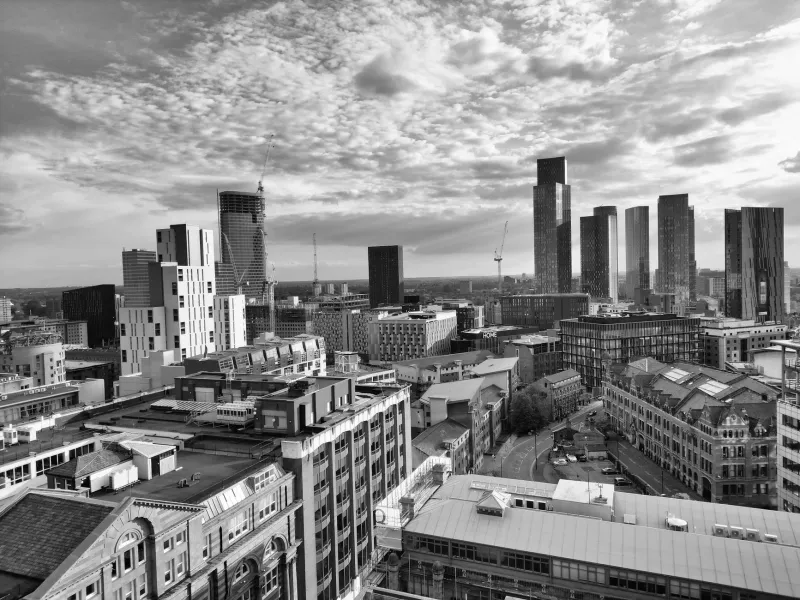
Walk into any venue in Manchester on a decent Friday night and you'll feel it — that specific civic confidence that this city carries in its chest. The way people talk about the place. The way bands introduce themselves from the stage. The way the crowd responds to any mention of the city's name like a Pavlovian jolt of collective pride. It's real, it's infectious, and it's unlike anywhere else in Britain.
But step outside that room, step into the wider mechanics of the music industry, and the picture gets considerably more interesting. Because "being from Manchester" is, commercially speaking, both an enormous asset and an occasionally complicated liability. And the artists who've navigated this most successfully have done so with a level of strategic self-awareness that rarely gets discussed.
The Weight of a Postcode
Let's be clear about what we're actually talking about here. Manchester doesn't just carry regional identity — it carries mythology. The city's music history is so extensively documented, so frequently referenced, so deeply embedded in the cultural consciousness of British music fans, that any new act from the area is immediately placed in relation to it. Whether they want to be or not.
This creates an unusual situation. For some artists, the association is pure gold. Drop a Manchester reference in an interview, lean into the accent in your vocals, name-check the right venues and the right predecessors, and you're tapping into a reservoir of credibility that most cities in the world simply don't have access to. The shorthand does a lot of work for you.
For others, particularly those working in genres that don't map neatly onto the city's existing reputation, the association can feel like a straitjacket. A Manchester-based artist making introspective electronic music or experimental R&B doesn't necessarily benefit from being framed through the lens of indie guitar bands and Madchester euphoria. Sometimes the postcode creates expectations that the music has no interest in meeting.
The Lean-In School of Thought
There's a particular breed of Manchester artist — and they exist across multiple generations — who have turned their provenance into the central plank of their identity. Not in a cynical, marketing-speak way, but in a manner that feels genuinely lived-in and authentic.
You hear it in the way they speak in interviews — the accent unmuted, the local references unfiltered. You see it in visual choices, in the venues they champion, in the way they conduct their relationship with local media. These are artists for whom "Mancunian" isn't a demographic box to tick but a genuine philosophical position. A statement of values as much as a statement of geography.
This approach, when it works, works extraordinarily well. The audience connection it generates is deep and durable in a way that more calculated image construction rarely achieves. Fans from Manchester respond to it with fierce loyalty. Fans from outside the city respond to it with the kind of aspirational fascination that regional identity, done well, can inspire. There's a reason people have been romanticising this city's music for decades — and artists who tap into that authentically are drawing on something genuinely powerful.
A booking agent who works with several acts across the North West observed: "The bands that fully commit to being from here, that make it part of the story rather than an incidental detail, tend to build their audiences faster at a grassroots level. The loyalty is different. It's almost tribal in a good way."
The Strategic Softening
On the other side of this equation are artists who, while not remotely ashamed of their origins, make deliberate choices to present themselves in ways that travel more easily. The accent gets slightly modulated in interviews aimed at national press. The local references are dialled back in favour of more universal emotional language. The biography focuses on musical influences rather than geographical ones.
This isn't dishonesty. It's a rational response to how the British music industry has historically operated. For much of the past few decades, the dominant centres of industry gravity — London's labels, London's tastemaker media, London's showcase circuit — have responded better to artists who feel accessible across the board rather than deeply rooted in a specific place.
Streaming has complicated this calculation interestingly. Playlist placement, which now drives a significant portion of discovery for new artists, operates on mood and genre rather than geography. An artist from Manchester competing for a coveted spot on a major playlist is competing on equal terms with artists from anywhere else in the world. In that context, leaning heavily into a specific regional identity can actually be a distraction from the music itself.
One artist manager, who asked not to be named but whose client list includes several acts from the Greater Manchester area, said: "We never tell anyone to hide where they're from. But there's a difference between being from somewhere and making it the entire pitch. For some artists, the Manchester connection is the story. For others, it's just a detail. Knowing which you are matters."
What the Numbers Suggest
Without getting too deep into the data weeds, there are some interesting patterns worth noting. Manchester-associated artists who've achieved significant chart success in the past decade have tended to fall into two distinct camps: those who've leaned so hard into local identity that they've become almost symbolic of the city, and those who've been so genre-defining that their origins become a secondary consideration.
The middle ground — artists who are moderately associated with Manchester without being strongly identified with it — appears to be the hardest commercial position to occupy. This might suggest that, at least in terms of visibility and cut-through, committing to one side of the equation or the other is more effective than hedging.
What It Means for the Venues and the Scene
From a venue perspective — and this is something that matters to those of us who spend significant portions of our lives in Manchester's live rooms — the identity question has real consequences for which artists build lasting relationships with local audiences.
The acts that feel genuinely of this city, regardless of how they present themselves externally, tend to generate the kind of atmosphere that makes a Manchester gig feel different from a gig anywhere else. There's a reciprocity in the room. The audience gives more because they feel that the artist is giving something specific back to them.
That's not something you can manufacture or strategise your way into. It either exists or it doesn't. And when it does exist — when a Manchester artist and a Manchester crowd find that frequency together — it's one of the best things live music has to offer anywhere.
Where you're from doesn't have to define you. But in this city, it does tend to find you eventually. The smart ones have figured out how to make that work for them.