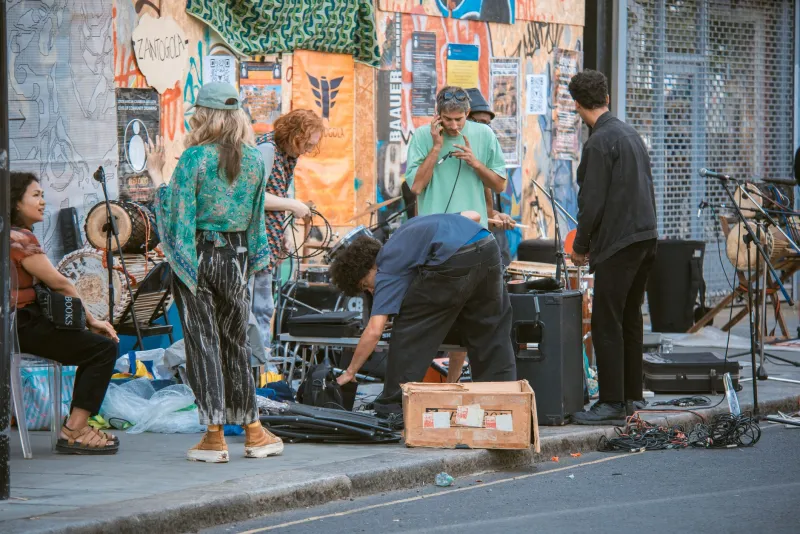
The Sound of Nowhere: Hunting Down Manchester's Secret Rehearsal Rooms

Photo: U.S. Army National Guard photo by Spc. Michael Schwenk, Public domain, via Wikimedia Commons
Ask someone to picture Manchester's music scene and they'll imagine the Northern Quarter. NQ vinyl shops, NQ murals, NQ bands with NQ haircuts. It's a lovely image and, if we're being honest, about a decade out of date.
The truth is that the music of this city isn't made in the places with the Instagrammable brickwork. It's made in draughty lock-ups on industrial estates, in mill conversions with paper-thin walls, in Salford warehouses where the only decoration is a fire exit sign and forty years of band stickers.
So we went looking. We asked around, followed the noise, and mapped out where Manchester's bands actually go to practice. What we found was a hidden city — and one under serious pressure.
The Lock-Up Economy
Start with the rehearsal rooms themselves. The classic model is the lock-up: a shipping container or partitioned unit on an industrial estate, rented by the month, shared between four bands who've worked out a rota. Bring your own backline, bring your own patience, and don't expect heating in February.
One guitarist we spoke to has rehearsed in the same Salford unit for eight years. "It's not glamorous. There's a kettle that barely works and a sofa that's been there since before I was born. But every band I've been in, every song I've written, happened in that box. You get attached."
These places have a culture all their own. The shared PA that nobody remembers buying. The unspoken rule that you don't judge anyone's terrible practice. The neighbour's drummer, audible through the wall, who you've never met but whose fills you know by heart.
Mill Country
Beyond the lock-ups sit the converted mills — the old textile buildings of Ancoats, Oldham, Bolton and beyond, where vast floor spaces get carved into rehearsal rooms and studio spaces. These are the cathedrals of the scene: proper rooms, decent soundproofing, backline you don't have to lug up three flights of stairs.
But here's the rub. Mill conversions are expensive to run, and developers have clocked that a mill full of bands pays less than a mill full of flats. Every few months another site goes up for sale, another landlord discovers what the property market will bear, and another cluster of bands scatters to the edges of the city.
The Price of Noise
And that's the story underneath all of this: the cost of making noise in Greater Manchester is going up, and going up fast. Rehearsal rates that were £8 an hour five years ago are pushing £20 in some spots. For a band practising weekly, that's real money — money that used to go towards pressing a single or booking a van.
The maths gets brutal quickly. Four people splitting £80 a week is £20 each, before strings, before petrol, before the gig itself costs them money. Small wonder so many promising bands quietly fold — not because they ran out of ideas, but because they ran out of premises.
The Door-Keepers
Which brings us to the heroes of this piece: the people running the rooms. They're an eccentric bunch — ex-touring musicians, sound engineers, one former venue booker we found — and they operate on margins so thin you'd weep.
"I could charge more," one operator told us, gesturing at a wall of peering amp stacks. "But the second I do, I lose the bands who need the room most. And they're the whole point. The room exists so a 17-year-old with a Squier has somewhere to be loud."
Some are getting organised, too. There's a growing push to get rehearsal spaces recognised as cultural infrastructure — the same protections and funding conversations that venues have started to have. It's slow going, but the fact the conversation is happening at all is new.
Where To Look
We're deliberately not publishing a full map — half these places prefer it that way, and the other half have waiting lists that make the point better than we could. But if you're in a band hunting for a room, here's the honest advice: ask the venue sound engineers, ask the other bands on your bill, and look beyond the city centre. The best rooms in Greater Manchester are, almost by definition, not where you'd expect.
The noise you hear from an anonymous industrial unit on a wet Wednesday night might be nothing. Or it might be the start of the next thirty years of Manchester music. Worth keeping an ear out, either way.