The Ear in the Room: Manchester's A&R Legends Who Heard It First

Photo: music industry scout notebook small venue concert crowd, via riotnoise.com
The Ear in the Room: Manchester's A&R Legends Who Heard It First
Every great signing has an origin story. A specific night, a specific room, a specific moment when someone with the authority to act on their instincts decided that what they were hearing was something the rest of the world needed to hear too. In Manchester, those moments have happened with extraordinary regularity — and the people responsible for them are among the most influential figures in British music history, even if most of us couldn't pick them out of a lineup.
A&R — artists and repertoire, in the formal language of the industry — is one of those job titles that sounds vague until you understand what it actually means. These are the people whose job is to find talent before it's obvious. To walk into a venue where the band has drawn twelve people and leave convinced they've just witnessed the future. And then to persuade everyone else in the building — the lawyers, the label bosses, the marketing departments — that they're right.
Manchester has produced an unusual concentration of people who were very, very good at this.
What the Scouts Were Actually Looking For
Ask any experienced A&R person what they're listening for and they'll give you an answer that sounds deceptively simple: something they haven't heard before. But unpacking that is where it gets interesting.
"It's not about technical perfection," explains one veteran talent spotter who worked across several major labels during Manchester's most fertile musical decades. "Half the bands I signed couldn't really play properly when I first saw them. What you're looking for is something ineffable — a quality of attention. Whether the room is listening to them or not, they're commanding it. That's rare."
Manchester's gig circuit provided an unusually rigorous testing ground for exactly that quality. Audiences here have never been particularly forgiving. A band that could hold a room at the Haçienda's early nights, or at the smaller venues that fed into it, had genuinely proved something. The scouts knew this, and they used the city accordingly.
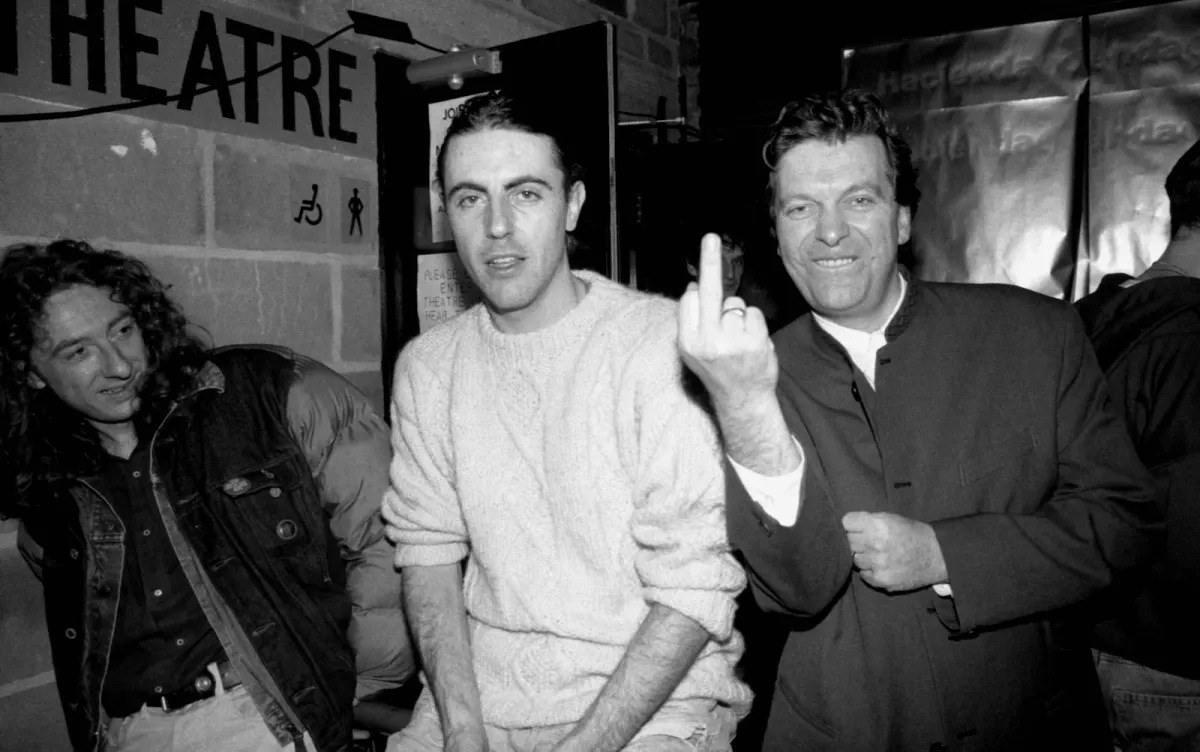 Photo: Haçienda, via cdn.manchesterski.com
The Notebook and the Hunch
Before smartphones, before SoundCloud, before anyone could share a clip of a promising act to a WhatsApp group within seconds of seeing them, A&R work was almost entirely physical. You showed up. You watched. You made notes on whatever was to hand — a beer mat, a folded flyer, the back of your own business card.
Several of the most significant signings in Manchester's musical history began with exactly this kind of analogue instinct. A scout catches a band on a Tuesday night supporting someone else entirely. They're not even sure what the band is called. They ask the promoter, scribble down the name, follow up the next morning.
"I saw them three times before I said anything to anyone at the label," recalls one A&R figure about a band he eventually signed to considerable commercial success. "I didn't want to spook them, and I didn't want to share the tip before I was certain. In this business, certainty is a luxury. But sometimes you just know."
That possessiveness — the instinct to keep a promising find close until the moment is right — is characteristic of the best A&R work. It's also, frankly, a survival mechanism in an industry where good ears are competitive currency.
Manchester's Particular Advantage
What made Manchester such fertile territory for talent discovery wasn't just the volume of bands the city produced, though that was considerable. It was the density and diversity of the live circuit — the fact that you could see three genuinely different acts on three genuinely different stages on any given Thursday night, all within walking distance of each other.
This compression accelerated everything. Bands developed faster because they gigged more. They got tighter, stranger, more confident, or they fell apart — and the ones that survived that process were genuinely ready for whatever came next.
The scouts who understood this used Manchester as a kind of filter. A band that had been playing the circuit for eighteen months and was still drawing a crowd, still growing, still finding new things to do on stage — that was a band worth serious attention.
"London was always chasing Manchester," says one former label executive who spent considerable time in the city during the eighties and nineties. "Not always successfully. But there was a reason the A&R community kept coming back up the M6. The city kept producing things that didn't sound like anything else."
The Ones That Got Away
No honest account of A&R work omits the misses. For every career-defining signing, there are several acts that slipped through the net — seen too early, passed over for reasons that seemed logical at the time and look baffling in retrospect.
"I passed on two bands in one week once," admits one scout with a rueful laugh. "Both of them went on to do very well. I still think about it. You never stop second-guessing yourself."
The Manchester scene is littered with what-ifs — bands that had the talent but not the timing, acts whose moment arrived slightly before or after the industry was ready for them. The scouts who were there remember these cases as clearly as their greatest successes, if not more so.
The Legacy of the Sharp-Eared Few
The A&R culture that flourished around Manchester's live scene left a mark that extends well beyond any individual signing. It established a set of values — authenticity over polish, originality over marketability, live performance as the ultimate test — that still shape how music is discovered and developed in this city.
Many of the people who cut their teeth as talent scouts in Manchester's venues went on to found independent labels, manage artists, or build the kind of careers that quietly underpinned entire generations of British music. They rarely get the recognition that the artists they signed receive, but the artists often acknowledge it freely.
"There was someone who believed in us before we believed in ourselves," is a sentence you'll hear repeatedly if you talk to enough Manchester musicians about how their careers began. Behind that sentence, almost always, is a person with a notebook and a hunch standing at the back of a room that most people had already left.
That's the job. And in Manchester, a handful of people did it better than almost anyone else in the country.