Hiss and Tell: Why Manchester's New Wave of Artists Is Falling Back in Love with Cassette Demos
Hiss and Tell: Why Manchester's New Wave of Artists Is Falling Back in Love with Cassette Demos
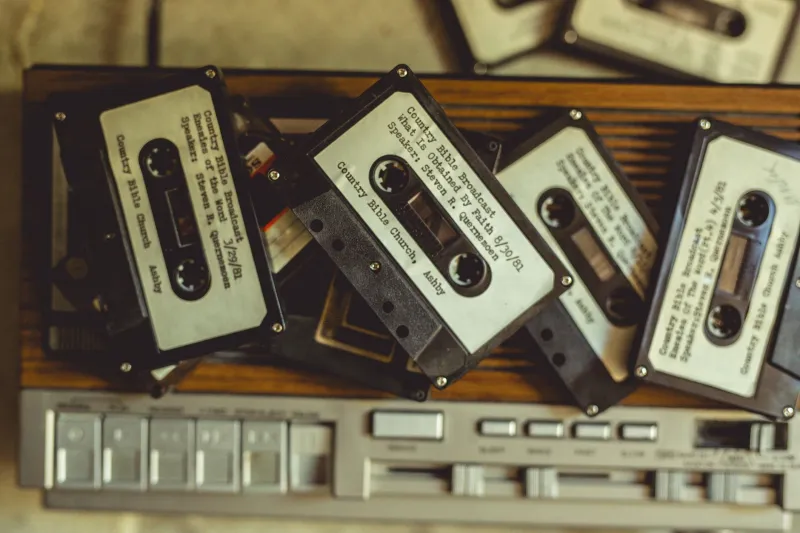
There is a particular kind of magic in pressing a cassette into someone's hands after a gig. It is warm from your jacket pocket, the J-card is hand-stamped, and the person receiving it has no idea whether they are holding the first recording of a future classic or a gloriously ramshackle noise experiment. Either way, they are holding something. You cannot hand someone a Spotify link in the same spirit and expect the same electricity.
Across Manchester right now, a quiet but unmistakable cassette revival is underway. It is not nostalgia for nostalgia's sake. Ask the bedroom producers and scrappy four-pieces behind it and they will tell you something more interesting: tape captures a truth about their music that digital formats actively iron out.
The Warmth You Cannot Fake
Anyone who has spent serious time in a recording environment — professional or otherwise — knows the phrase tape saturation. When an analogue signal hits magnetic tape slightly harder than it should, something genuinely beautiful happens. The transients soften, harmonics bloom, and the whole thing breathes in a way that even the most expensive digital plugin struggles to convincingly replicate. For Manchester's indie and bedroom pop community especially, that quality is not a bug. It is the entire point.
Salford-based four-piece The Gradients started pressing their demos to cassette two years ago after a chance encounter with a knackered Tascam four-track at a rehearsal room off Regent Road. "We'd been trying to get our recordings to sound less perfect," says guitarist and vocalist Mia Chambers. "Digital kept making everything too clean, too corrected. The first time we ran a mix through that Tascam and bounced it to tape, we played it back and it sounded like us. All the rough edges were still there but they sounded intentional."
That sentiment crops up repeatedly when you talk to Manchester artists currently working with tape. The imperfections are not flaws to be fixed. They are evidence of real humans playing real instruments in a real room.
The Demo That Opens Doors
Beyond the sonic argument, there is a deeply practical reason why cassette demos still carry weight in Manchester's live circuit. A physical object demands a response in a way a digital file simply does not.
When Levenshulme singer-songwriter Dara Osei handed a hand-dubbed C46 to a promoter at the back of the Peer Hat eighteen months ago, he did not expect much. "I'd emailed him three times and heard nothing back. I was playing a support slot, he was at the bar, I just walked up and gave him the tape and said, 'It sounds better than the email, I promise.'" The promoter, apparently charmed by the audacity of it, took it home, dug out an old player, and rang Dara the following Tuesday to offer him a headline slot. The email thread is still unread.
 Photo: Peer Hat, via d2joqs9jfh6k92.cloudfront.net
That story is not unique. Ask around Manchester's grassroots venues — Night and Day, The Eagle Inn, Gullivers — and you will find promoters and bookers who quietly admit that a well-presented cassette demo still catches their attention in a way that a SoundCloud link buried in a booking enquiry never does. It signals commitment. It signals personality. It signals that an artist has thought about presentation rather than just convenience.
The Bedroom Duplicator Economy
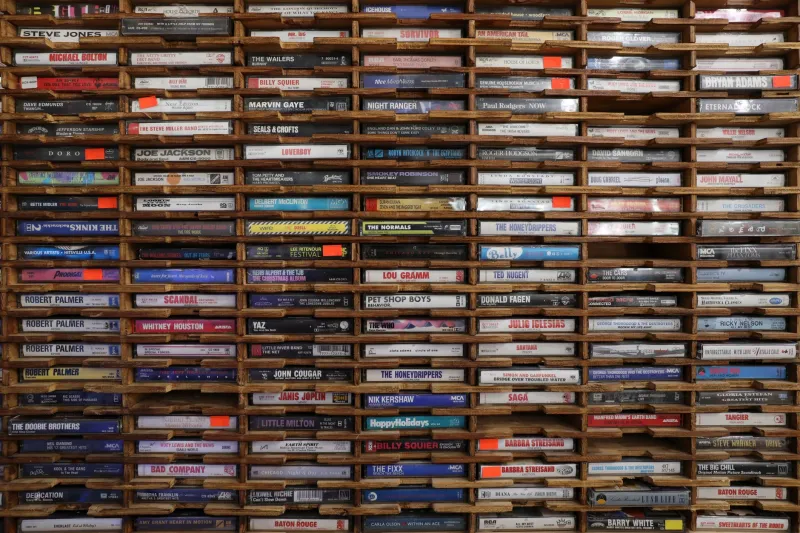
What makes Manchester's cassette scene particularly interesting is how self-sufficient it has become. A small but growing network of artists are duplicating their own tapes at home using consumer-grade dubbing decks sourced from charity shops and eBay, printing their own J-cards on inkjet printers, and distributing everything through gig merch tables and the odd independent record shop.
Northern Quarter institution Vinyl Exchange has quietly started stocking local cassette releases alongside its second-hand vinyl. Manager Pete Ashworth says the uptake has surprised him. "We started taking a few local tapes on a trial basis and they moved faster than I expected. There's a real appetite for something tactile, something that says a person made this with their hands."
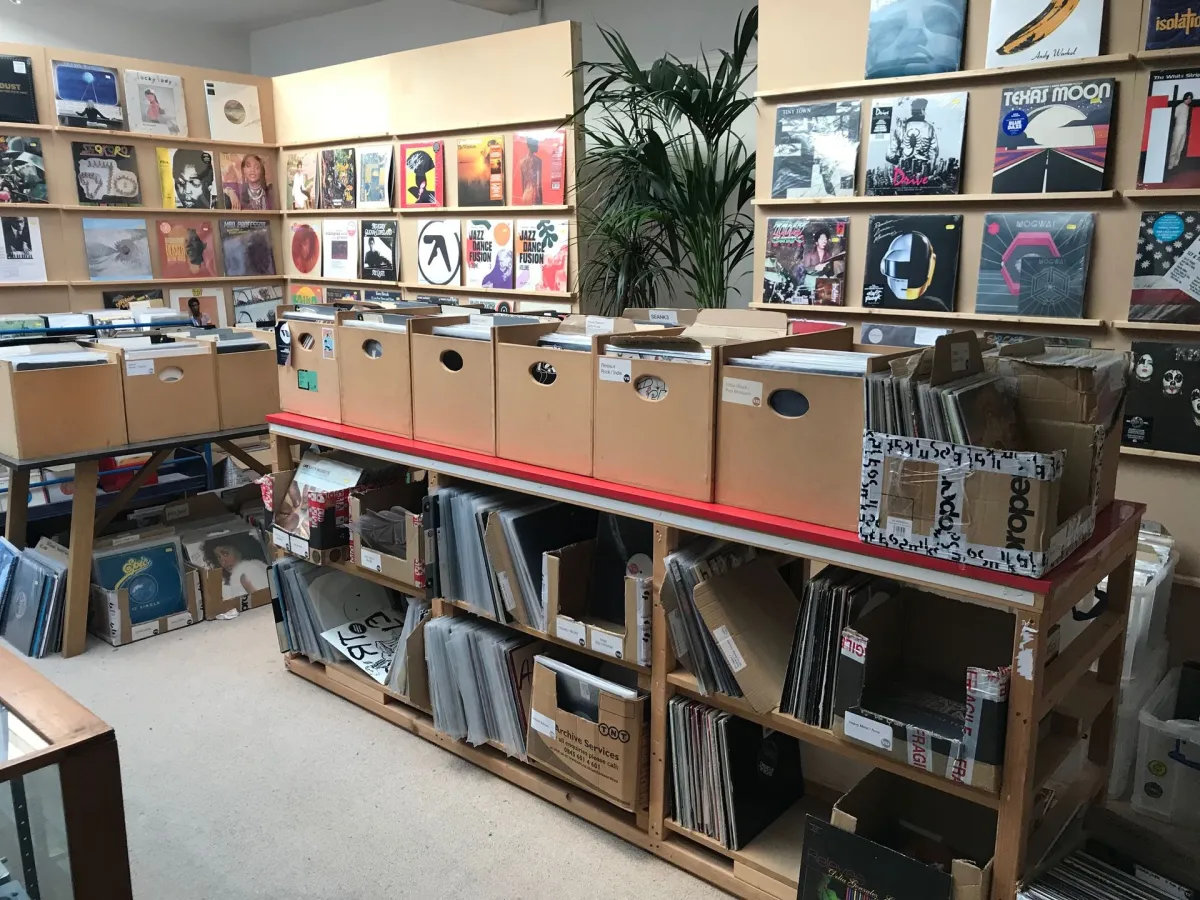 Photo: Vinyl Exchange, via irp.cdn-website.com
The economics are surprisingly workable too. A basic USB cassette duplicator and a job lot of blank C60s represent a modest outlay compared to pressing vinyl or manufacturing CDs. For an artist selling tapes at a fiver a pop on a merch table, the margins are actually reasonable — and more importantly, the conversation that happens when someone picks one up is worth more than any algorithm.
Does It Actually Sound Good?
Here is where it gets interesting. The cassette revival in Manchester is not universally about lo-fi aesthetics. Some artists are using tape as a mastering medium rather than a recording one — tracking everything digitally, mixing carefully, then running the final stereo mix through a well-maintained tape machine to add warmth before the signal is converted back. The result sits somewhere between the clinical precision of modern recording and the organic character of fully analogue production.
Others lean fully into the hiss and the wow-and-flutter, treating them as compositional elements. Ancoats ambient producer Lena Voss deliberately records field recordings from around Manchester — tram announcements, market noise, rain on the Arndale canopy — to tape first, letting the medium add its own texture before layering synthesisers over the top. "The city has a sound," she says, "and tape adds another layer of age to it. Like it's already a memory before you've even heard it properly."
The Tape Doesn't Lie, But It Does Flatter
If there is a counterargument to the cassette revival, it is that tape is forgiving in ways that can obscure genuine weaknesses in songwriting or performance. A great vocal performance recorded to tape sounds extraordinary. A mediocre one still sounds pretty decent. Whether that is a feature or a flaw probably depends on how honest you want to be with yourself.
But for Manchester's emerging artists navigating an industry where algorithmic playlists and streaming metrics increasingly dictate what gets heard, the cassette demo represents something valuable beyond sound quality. It is a declaration of intent. It is proof that you showed up, made something physical, and cared enough to put it in someone's hands.
In a streaming world where music can feel weightless and disposable, a cassette has actual mass. You can feel it. You have to actively choose to play it. And when you do, it plays back imperfectly, warmly, and entirely on its own terms.
Somehow, that still feels like the most Manchester thing imaginable.