Empty Room Champions: Manchester's Musical Underdogs Who Conquered the Void
The Sound of One Hand Clapping
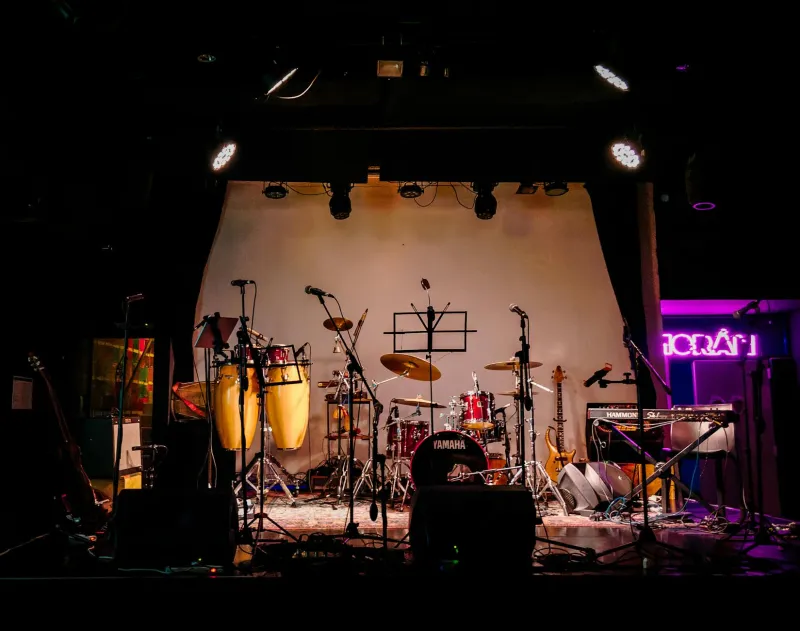
There's a special kind of hell reserved for musicians: standing on stage, pouring your heart out to an audience that could comfortably fit in a taxi. Yet Manchester's musical history is littered with future legends who cut their teeth in rooms so empty you could hear a pin drop between songs—and often did.
"Our first proper gig was at Night & Day Café," remembers Jake Williams, guitarist for indie darlings The Velvet Riots, who've since headlined festivals across Europe. "There were literally four people there, and two of them were the sound engineer and his girlfriend. The other two left during our second song. We played the full set to an empty room and a very patient barman."
 Photo: Night & Day Café, via www.lycee-tripoli.edu.lb
Lessons from the Void
Rather than crushing spirits, these brutal early experiences often forge the character that separates future stars from bedroom dreamers. The ability to perform with conviction regardless of audience size becomes a superpower when those same artists eventually face thousands of screaming fans.
"Playing to nobody teaches you everything about being a musician," explains Sarah Chen, whose electronic project Neon Shadows went from playing to empty basement rooms to supporting major acts at the O2 Victoria Warehouse. "You can't rely on crowd energy to carry you through. You have to find the magic within the music itself, within your connection to your bandmates. It's pure."
 Photo: O2 Victoria Warehouse, via www.scienze-naturali.com
The Academy of Empty Rooms
Manchester's smaller venues have served as unwitting academies for future greatness. The Castle Hotel, Night & Day Café, and countless other intimate spaces have witnessed the early struggles of artists who later conquered much larger stages. These venues' willingness to give unknown acts a chance, regardless of their pulling power, has been crucial to the city's musical ecosystem.
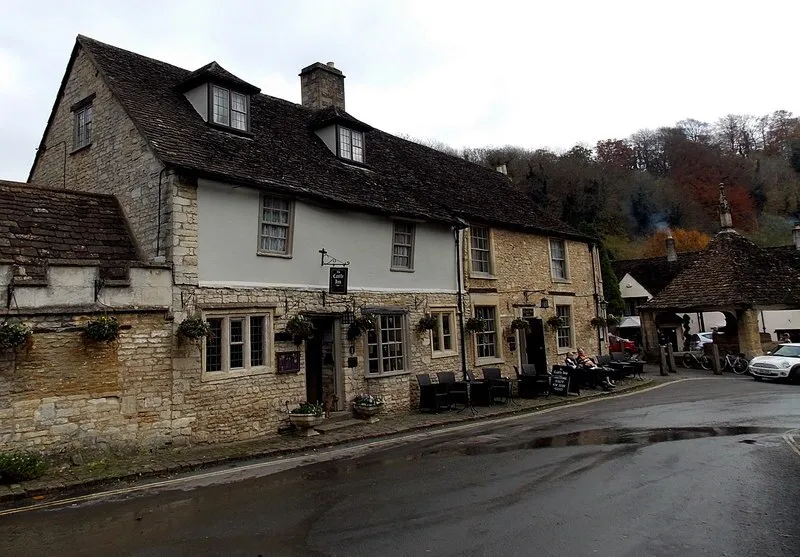 Photo of The Castle Hotel, via Wikidata/Wikimedia Commons
Venue owner Mike Roberts has run several small Manchester venues over the past two decades. "I've seen bands play to three people who later sold out arenas," he reflects. "The ones who make it aren't necessarily the most talented—they're the ones who treat that audience of three like they're playing Wembley. Professionalism in the face of indifference is what separates the wheat from the chaff."
Technical Disasters and Character Building
Empty rooms often come with additional challenges: faulty equipment, missing sound engineers, and venues that care more about their beer sales than sound quality. For emerging artists, these obstacles become masterclasses in adaptability and problem-solving.
Drummer Pete Morrison, now touring internationally with post-punk outfit The Frequency, recalls a particularly disastrous early show: "The PA system died completely during our opening song. We had a choice: pack up and go home, or play acoustic to the six people who'd bothered to show up. We chose acoustic. Those six people became our first proper fans, and they brought friends to every show after that."
The Psychological Warfare of Indifference
Perhaps the greatest challenge facing artists in empty rooms isn't technical failure or poor acoustics—it's the crushing weight of indifference. Learning to perform with passion when the audience clearly has better places to be requires a special kind of mental fortitude.
"The hardest part wasn't the empty room," admits vocalist Lucy Thompson, whose band Midnight Chorus now regularly sells out Manchester venues. "It was the people who were there but obviously weren't listening. Scrolling through their phones, having conversations during your quietest songs, treating you like background music. That's when you really question whether you're deluding yourself."
Finding Gold in the Wreckage
Yet these apparently soul-destroying experiences often contain hidden treasures. Artists frequently cite empty room gigs as the moments they discovered their true sound, learned to communicate with their bandmates, or developed the stage presence that would later captivate thousands.
"Our worst gig ever was also our most important," reflects bassist Tom Edwards, whose band The Static now headlines festivals. "We were playing to maybe eight people at a pub in Levenshulme, and everything that could go wrong did go wrong. But we kept playing, kept finding ways to make it work, and by the end we'd discovered this new dynamic between us that became the foundation of our sound."
The Faithful Few
Within Manchester's music community exists a dedicated cadre of fans who attend small gigs religiously, providing crucial early support for emerging artists. These musical missionaries understand their role in the ecosystem—they're not just audience members, they're midwives to new talent.
"There are maybe fifty people in Manchester who go to everything," observes music blogger and gig regular Amanda Foster. "We're the ones who show up when nobody else will. We've seen future chart-toppers play to empty rooms, and we've also seen bands with massive potential disappear because they couldn't handle the early rejection."
From Zero to Hero
The transformation from empty room strugglers to headlining acts isn't always linear, but the lessons learned in those early battles prove invaluable. Artists who've survived the crucible of indifferent audiences develop an unshakeable confidence in their material and their ability to connect with people.
"When you've played your heart out to an empty room and still believed in what you were doing, everything else feels easy," explains songwriter Mark Davies, whose solo project evolved from coffee shop acoustic sets to arena tours. "Hostile crowds, technical problems, industry rejection—it's all manageable when you've already faced the ultimate challenge: convincing yourself that your music matters even when nobody's listening."
The Manchester Way
Perhaps what's most remarkable about Manchester's empty room graduates is their lack of bitterness about those early experiences. Rather than viewing them as humiliating failures, they're celebrated as essential education—proof that great music will eventually find its audience, no matter how small the starting point.
"Every empty room taught us something," concludes Jake Williams. "How to command a stage, how to support each other when everything's going wrong, how to believe in our music even when nobody else does. Those weren't wasted gigs—they were the most important shows we ever played."