Battle Scars of the Scene: How Manchester's Gig Bands Tell Stories Without Words
The Unspoken Language of Layered History
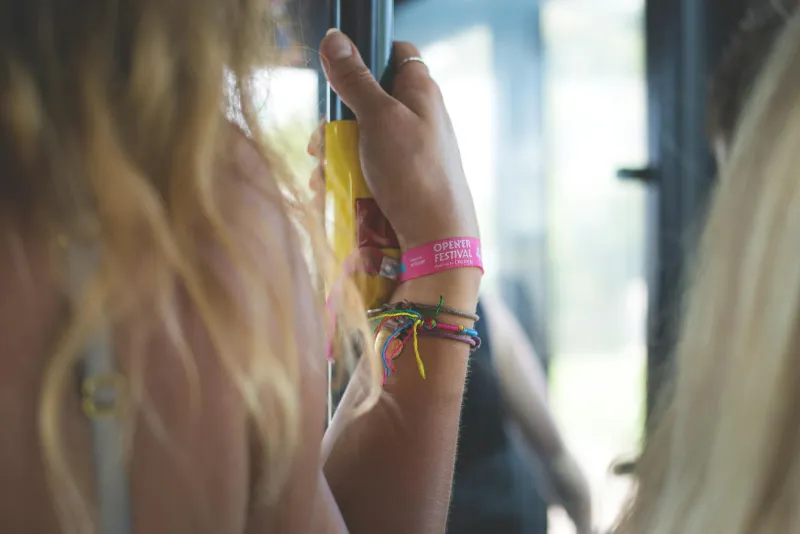
Walk through the Northern Quarter on any given Saturday night and you'll spot them: the veterans of Manchester's music scene, identifiable not by their vintage band tees or scruffy Converse, but by the rainbow of frayed fabric and plastic circling their wrists. These aren't fashion statements—they're historical documents, each band representing a night when the world stopped and the music took over.
Sarah Mitchell, 34, works behind the bar at Dry 201 and hasn't removed a single gig wristband in over fifteen years. "People think I'm mental," she laughs, rolling up her sleeve to reveal what looks like a technicolour medical condition. "But every single one of these tells a story. This green one? That's when I saw Arctic Monkeys at the Ritz in 2005, back when Alex Turner still looked like he'd rather be anywhere else."
 Photo: the Ritz, via hoferholz.weebly.com
 Photo: Arctic Monkeys, via i.pinimg.com
The Psychology of Never Letting Go
Dr. Emma Harrison, a cultural psychologist at Manchester Metropolitan University, suggests there's more to this behaviour than simple nostalgia. "These wristbands become physical anchors to peak emotional experiences," she explains. "In a city where music is so deeply embedded in identity, wearing your gig history becomes a way of broadcasting who you are without saying a word."
 Photo: Manchester Metropolitan University, via s1.cdn.autoevolution.com
The practice seems uniquely Manchester in its intensity. While fans everywhere collect ticket stubs and posters, the commitment to wearing every single wristband—through showers, job interviews, and family dinners—speaks to something deeper about how Mancunians relate to their musical heritage.
Layers of Legend
Jamie Roberts, 41, a graphic designer from Chorlton, estimates he's wearing nearly 200 bands across both arms. "The bottom layer is archaeological at this point," he grins. "There's definitely some Oasis in there from Maine Road, but I can't see it anymore. It's like the rings of a tree—you'd have to cut me open to count them all."
The social currency of these collections can't be understated. At gigs, wristband-wearers engage in subtle one-upmanship, comparing collections like generals comparing war medals. "You can tell the real heads from the tourists," explains Marcus Thompson, who runs the merchandise stall at several Manchester venues. "The ones with the thick stacks? They've earned their stripes. They've been in the trenches."
When Memory Becomes Monument
Not everyone survives the accumulation. Lisa Patel, 29, finally cut off her collection last year after a particularly awkward job interview where her potential boss couldn't stop staring at her rainbow-wrapped forearms. "I kept them all in a box," she admits. "Couldn't bring myself to throw them away. It felt like throwing away pieces of myself."
The removal process is often traumatic. Several collectors describe the phantom limb sensation of reaching for wristbands that are no longer there, or the strange lightness of unadorned arms after years of accumulated weight.
The New Guard
Younger fans are adapting the tradition for the digital age. Seventeen-year-old Mia Chen photographs each wristband before adding it to her collection, creating a digital archive to complement the physical one. "My mum keeps asking when I'll grow out of it," she says, adjusting a particularly stubborn Kasabian band from last month's Apollo show. "But these aren't just bits of plastic—they're proof I was there when it mattered."
Sacred Rituals of Accumulation
The application of each new band follows unspoken protocols. Most collectors favour the non-dominant wrist for new additions, preserving the dominant arm for the most treasured pieces. Some organise by venue, others by year, and a dedicated few arrange theirs by emotional significance—the life-changing gigs closest to the pulse point.
"There's definitely a hierarchy," explains venue regular Tony Ashworth. "Festival bands go on the back of the wrist, small gig ones near the palm. And if you're lucky enough to get an artist pass or afterparty band? That goes right at the front where everyone can see it."
Living History on Living Skin
In a city that's constantly evolving, where beloved venues close and new ones open with alarming regularity, these wristband collections serve as personal museums of Manchester's musical heritage. They're proof of attendance at moments that can never be repeated, witnesses to nights when ordinary rooms became sacred spaces.
As Manchester's music scene continues to write new chapters, the collectors keep stacking their evidence, one band at a time. Each frayed edge and faded logo is a small victory against time, a refusal to let the magic fade. In a world increasingly obsessed with digital memories, there's something beautifully analogue about wearing your history on your sleeve—or in this case, your wrist.