Small Batch, Big Feeling: Why Manchester Artists Are Pressing Vinyl Again
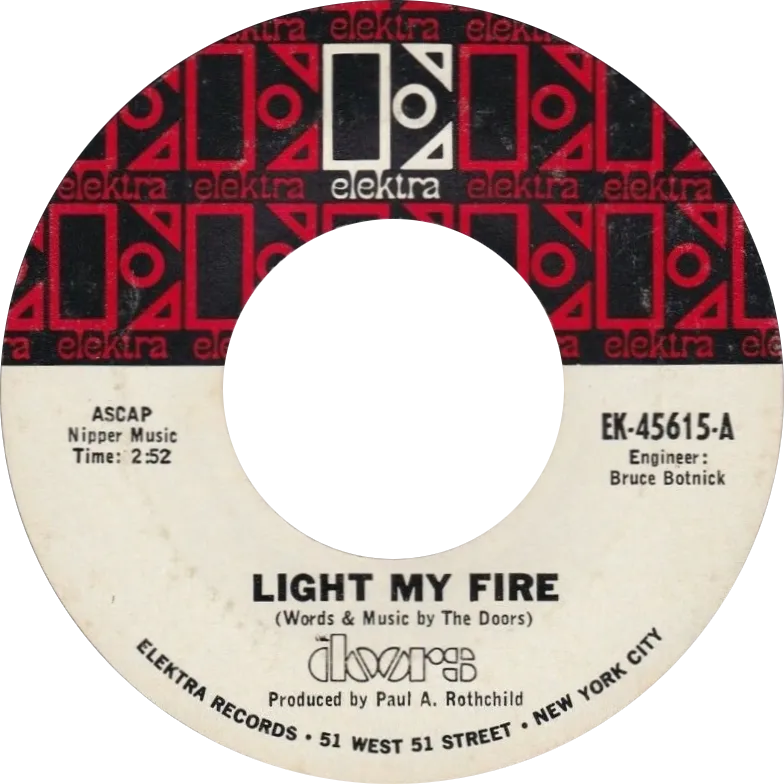
Photo: Elektra Records, Public domain, via Wikimedia Commons
There's a moment — ask anyone who's been through it — when you hold your own record for the first time. Not a test pressing, not a promo copy someone else handed you, but yours. Your name on the label. Your music in the groove. Your artwork on a twelve-inch sleeve that took three weeks and two heated arguments to get right. It's a feeling that no streaming dashboard, no matter how many zeroes it eventually shows, can come close to replicating.
Across Manchester right now, more independent artists than ever are chasing that feeling. And they're willing to spend real money to get there.
The Numbers Don't Add Up — So Why Bother?
Let's be honest about the economics first, because nobody in the Manchester scene is pretending vinyl is a cash cow. A small run of 300 copies — which is about as low as most pressing plants will go before the per-unit cost becomes genuinely painful — will set you back anywhere from £1,500 to £3,000 depending on weight, colour, and sleeve finish. You'll need to factor in mastering, artwork, distribution if you want it in shops, and the months of waiting time that comes with every order thanks to a global backlog that never quite seems to clear.
So why are so many Manchester artists doing it anyway?
"Because it exists," says Cara Whitfield, who records as Pale Meridian and pressed 250 copies of her debut EP earlier this year through a small Salford-based label. "Streams feel like renting. You put the music up, people listen, and then it just... floats there. A record is a thing. It lives in someone's house. It gets played at parties. It survives."
That language — survival, permanence, physical reality — comes up again and again when you talk to Manchester musicians about why they've made the leap.
The Pressing Plant Perspective
The UK pressing industry has had a chaotic few years. Demand exploded post-pandemic, waiting times stretched to eighteen months in some cases, and smaller plants struggled to keep up while the majors hoovered up capacity for Taylor Swift and Arctic Monkeys reissues. But things have stabilised somewhat, and a handful of independent plants — including some with strong ties to the North West — are now actively courting the DIY end of the market.
"We love working with independent artists because they care," says one plant manager who asked not to be named but has been pressing records for northern acts for over a decade. "The big label jobs come in on a spreadsheet. The indie jobs come in with handwritten notes about the exact shade of blue they want for the vinyl. That passion makes a difference to the final product."
That attention to detail is itself part of the appeal. Coloured vinyl, hand-numbered sleeves, lyric inserts printed on recycled paper — these are decisions that streaming will never ask you to make, and Manchester artists are treating them like creative extensions of the music itself.
Community Built in Wax
There's something else going on beyond the physical object, though. Vinyl runs are becoming a way of building and sustaining community in a city where the live scene has always been the backbone of everything.
Bands are pressing limited editions specifically for their local audience — records you can only buy at a gig, or through a mailing list, or from a particular independent shop on Oldham Street. The scarcity is the point. It creates a reason to show up, a reason to stay connected, a reason to feel like you're part of something rather than just a passive listener clicking play on a platform that takes thirty percent.
"I sold sixty copies at our headline show at Gullivers," says Tom Reeves of post-punk three-piece Dusk Patrol. "Sixty. At a gig. That's more money than we made from three months of streaming, and every single person who bought one had a conversation with us about it. That's the bit you can't put a price on."
Independent record shops have noticed the shift too. Piccadilly Records and Vinyl Exchange — both institutions in their own right — have reported a steady increase in local acts approaching them about stocking small runs, something that would have felt almost quaint five years ago.
What It Says About the Industry
The vinyl revival among independent Manchester artists isn't happening in a vacuum. It's a direct response to the increasingly obvious reality that streaming, for most working musicians, is not a revenue stream. It's a promotional tool at best, and a demoralising one at worst when you watch your monthly listeners tick up while your bank balance stays stubbornly flat.
The major labels have adapted to streaming because they have the volume to make it work. A million streams means something different when you've got fifty acts generating them simultaneously. For a band in Levenshulme playing to three hundred people on a good night, a million streams is a fantasy. Three hundred records sold at a tenner each is a business plan.
"We stopped thinking about streaming as income a long time ago," says Whitfield. "Now we think about it like a poster. It tells people we exist. The record is what we actually sell."
That reframing — streaming as marketing, vinyl as product — is becoming the working model for a growing number of Manchester's independent artists. It's not a rejection of the digital world so much as a clear-eyed assessment of where the value actually sits.
The Feeling That Started All of This
Get any Manchester musician talking about their first vinyl release long enough and you'll eventually get back to that moment. The weight of the sleeve. The smell of the pressing. The specific satisfaction of dropping the needle and hearing your own music come back at you from a physical object that will still exist in twenty years.
No algorithm gives you that. No playlist placement, no editorial feature, no Spotify for Artists dashboard notification at midnight. Just a record. Yours. Real.
In a music industry that increasingly trades in the ephemeral, that realness turns out to be worth quite a lot.