The Counter Knows First: Why Manchester's Record Shops Still Break Bands
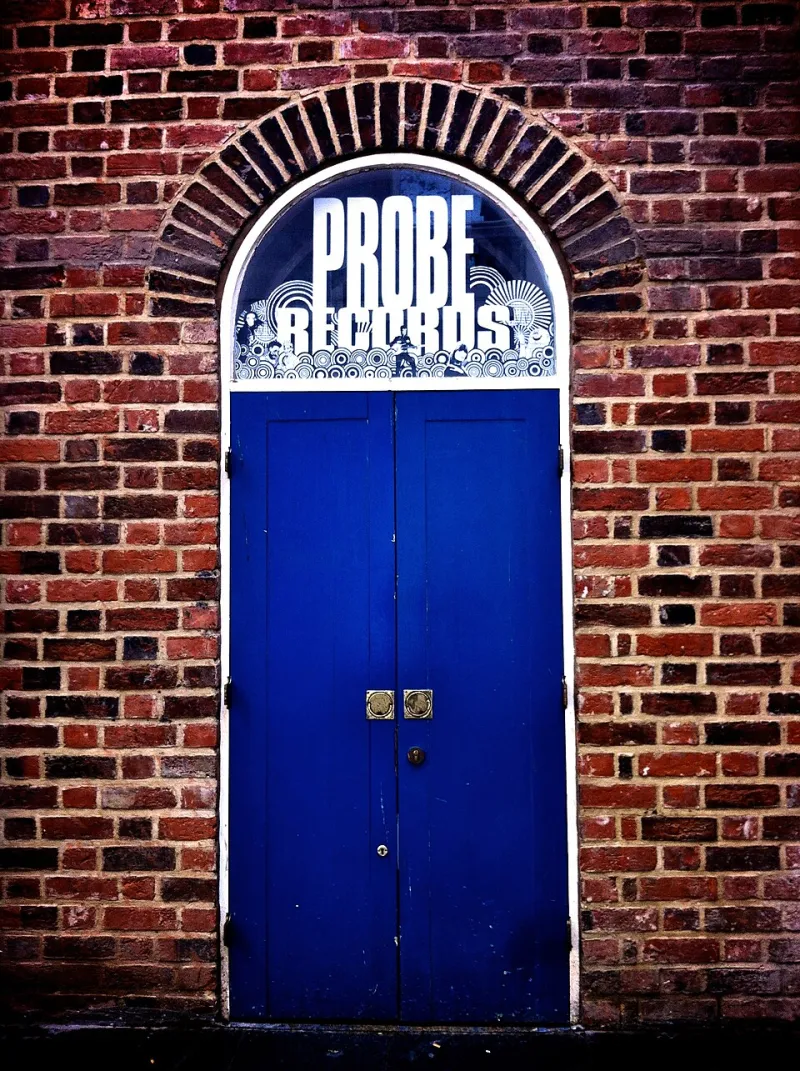
Photo: Jan Hammershaug, CC BY 2.0, via Wikimedia Commons
Every Manchester musician who has ever got anywhere has a version of the same story. It involves a shop, a counter, and somebody behind it who had no reason to be helpful and was anyway.
Not a marketing campaign. Not a big playlist add. Just someone who worked in a record shop, knew what was good, and decided to say so out loud to the next person who walked in.
The Oldest Filter in the Business
Record shops have been doing unofficial A&R in this city for decades. Long before anyone talked about discovery algorithms, the person behind the counter was the algorithm — part taste-maker, part gatekeeper, part therapist for bands who'd spent their advance on a pressing run nobody wanted.
Walk up Oldham Street or into one of the neighbourhood shops out in Chorlton or Burnage and you're walking into a working archive. Local releases sit shoulder to shoulder with the big stuff. Some of them have been there for years, quietly waiting for someone to ask a question. That's the bit the streaming model can't replicate: you can't browse a recommendation.
The Shop Is the Venue
In-store performances are the most underrated gigs in Greater Manchester. They're free or near-free, they happen at six in the evening, they finish in time for the tram, and they put a band in front of a room of people who are already halfway converted because they chose to be in a record shop on a Thursday.
They're also brutally honest. A tiny PA, no lighting rig, no barrier, and forty people standing very close. If the songs work in that room, they work. Plenty of local acts have built their first real following in exactly that environment — acoustic versions of electric songs, B-sides nobody's heard yet, a cover that gets the whole shop grinning.
The Noticeboard Is Still Undefeated
Ask around and the most old-fashioned thing in the shop turns out to be one of the most important. The noticeboard, or the flyer stack by the till, or the little corner of the window given over to someone's single launch.
It matters because it's earned. Nobody gets a flyer into the stack by buying an ad package. They get it by turning up, asking, and being known — by the shop having some sense that this person is part of the furniture rather than passing through. For a new band, that's a small piece of validation that's genuinely hard to buy.
Staff Picks as a Trust Contract
A staff pick is a small act of reputation. The person who writes that card is putting their name on it, and in a scene this size, that means something. Get it wrong often enough and people stop reading your picks.
That's precisely why the system works. It's accountable in a way that a personalised feed isn't. The algorithm doesn't have to look you in the eye on Saturday afternoon and explain why it thought that record was any good.
Record shops also do something the industry is notoriously bad at: they hold local releases that aren't on anyone's radar. Limited pressings, self-released EPs, tapes sold on a sale-or-return basis because the shop owner liked the band. Those records exist in the physical world because somebody made a judgement call.
The Unpaid Infrastructure
It's worth naming how much of Manchester's musical infrastructure is run on goodwill. Shops that take local stock on thin margins. Staff who hand out advice for free. Owners who let a band play in-store for nothing but a whip-round and a bit of footfall.
That's not a business model, it's a belief. And it's fragile. Shops close, and when they do, a chunk of the discovery network goes with them — not just the stock, but the knowledge, the connections and the willingness to take a punt on somebody local.
What the Counter Still Gives You
The counter is a filter, but not in the exclusionary sense. It's a filter in the way a good friend is a filter: it narrows the world down to things worth your time, and it knows your taste because it's been paying attention for years.
If you're in a band, that's still worth cultivating. Go in. Talk to people. Ask them to stock your record and take the knock-back if it comes. Play the in-store. Leave a flyer. Be a regular. It's slower than a playlist pitch and considerably more likely to work in the long run.
And if you're a fan, the counter remains one of the most trusted voices in the city — one that has never once been paid to recommend something it didn't actually like. In 2026 that's starting to feel like a rare and valuable thing.