Sacred Pints: The Hallowed Boozers That Fuel Manchester's Pre-Gig Rituals
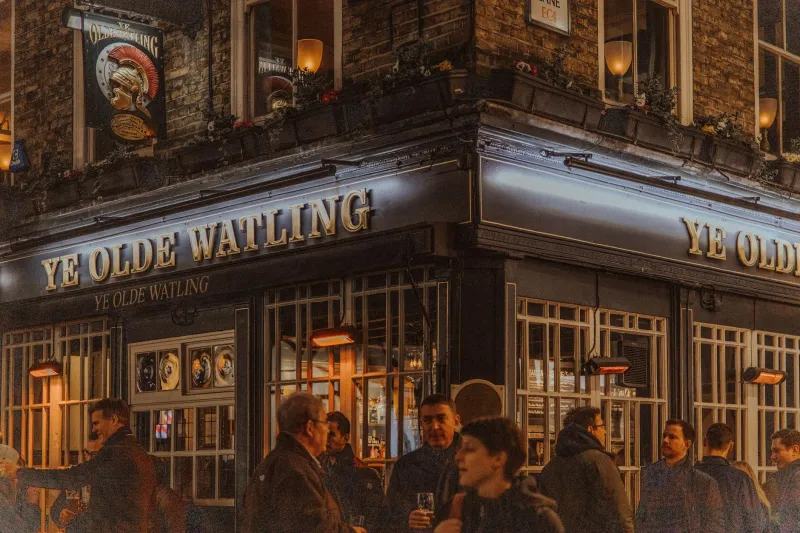
The Temple Before the Cathedral
Every great Manchester gig begins the same way: not with the opening act, not with the sound check, but with the sacred ritual of the pre-show pint. Scattered around the city's legendary venues like satellites orbiting musical planets, these aren't just pubs—they're preparation chambers where anticipation ferments alongside the ale.
"The Crown & Kettle has been our launching pad for Academy shows since the '90s," explains Dave Morrison, a 52-year-old plumber who's witnessed more Manchester music history through beer goggles than most journalists see sober. "Same table, same round, same terrible predictions about whether the band will be any good. We've got it down to a science."
 Photo: The Crown & Kettle, via images-wixmp-ed30a86b8c4ca887773594c2.wixmp.com
The Geography of Great Expectations
Each venue has its gravitational pull on specific pubs. Academy-goers swear by The Crown & Kettle and Sandbar, while Albert Hall devotees make pilgrimages to The Salisbury. The Ritz faithful congregate at Kro Bar, and those brave enough to venture to the O2 Victoria Warehouse often start their journey at The Castlefield Hotel.
 Photo: The Salisbury, via www.oknamacek.cz
These aren't random choices—they're carefully calibrated decisions based on decades of collective wisdom about walking distances, toilet queues, and the crucial timing required to arrive at the venue neither too early (standing around like a spare part) nor too late (missing the support act that might just change your life).
Landlords of Legend
Behind every great pre-gig pub stands a landlord who understands the weight of responsibility. Pat Kennedy has been pulling pints at The Crown & Kettle for over twenty years, and she's developed an almost supernatural ability to predict which nights will bring chaos to her establishment.
"You can tell by the band," she explains, wiping down glasses with the efficiency of someone who's served thousands of nervous music fans. "Indie bands bring the chatterers—all excited energy and animated discussions about B-sides. Metal crowds are surprisingly polite, actually. It's the reunion tours that bring the proper mayhem. Grown men crying into their bitter because they're about to see their teenage heroes."
The Unspoken Rules of Engagement
Pre-gig pub culture operates on a complex set of unwritten laws. Tables near the door are reserved for groups planning quick exits. The bar becomes a neutral zone where strangers bond over shared musical obsessions. And woe betide anyone who tries to change the music—the jukebox stays off on gig nights, preserving the collective nervous energy for the main event.
"There's definitely an etiquette," observes Jenny Walsh, a regular at Sandbar before Academy shows. "You don't talk about other gigs you've seen by the same band—that's just showing off. You don't predict the setlist because you'll jinx it. And you absolutely never, ever suggest leaving for the venue before everyone's finished their drinks. That's amateur hour."
Superstitions and Sacred Traditions
Like footballers with their pre-match rituals, Manchester's gig-goers have developed elaborate superstitions around their pub visits. Some groups insist on the same table for every show. Others perform complex toasting ceremonies, raising glasses to absent friends or legendary performances past.
Martin Fletcher, who's been attending gigs for thirty years, admits to wearing the same jacket to every pre-gig pub session. "It's not about the jacket," he insists, though the faded leather suggests otherwise. "It's about maintaining the connection to all the great nights that came before. The pubs are part of the magic—you can't just rock up to a venue cold. You need the warm-up."
The Art of Perfect Timing
Mastering the pre-gig pub visit requires precision timing that would impress Swiss watchmakers. Too early, and you're drinking alone while the venue staff are still setting up. Too late, and you're rushing pints while anxiety builds about missing the opening songs.
"Two hours before doors open, that's the sweet spot," explains Tommy Harrison, a veteran of countless Academy nights. "Gives you time for three pints maximum—enough to take the edge off but not so many that you're queuing for the bogs during the encore. It's a delicate balance."
Stories From Behind the Bar
The bar staff at these establishments have witnessed more Manchester music history than most critics. They've served drinks to nervous support acts killing time before their big break, watched industry executives making deals over warm beer, and provided tissues to fans devastated by last-minute cancellations.
"The best nights are when the bands themselves show up," reveals Alex Chen, who manages the bar at The Salisbury. "Usually the drummer, sometimes the bass player—never the singer, they're too precious about their voice. They're just normal people having a quiet pint before work, really. Except their work happens to be making thousands of people lose their minds."
Digital Age, Analogue Rituals
Despite apps that can order drinks to your seat and streaming services that eliminate the need to discover new music, the pre-gig pub ritual remains defiantly analogue. These are spaces where phones stay in pockets and conversations happen face-to-face, where the anticipation builds through human connection rather than digital distraction.
The Final Call
As closing time approaches and groups reluctantly drain their glasses, the transformation begins. Ordinary people become pilgrims, walking the short distance from pub to venue with the purposeful stride of those about to witness something special. The pre-gig pint has done its job—loosening inhibitions, building camaraderie, and creating the perfect emotional state for musical transcendence.
In Manchester, the gig doesn't start when the lights go down. It starts with that first sip in a crowded pub, surrounded by fellow believers, all united in the faith that tonight might just be the night that changes everything.