Crumpled Evidence: Who Still Makes Manchester's Gig Flyers in 2026?

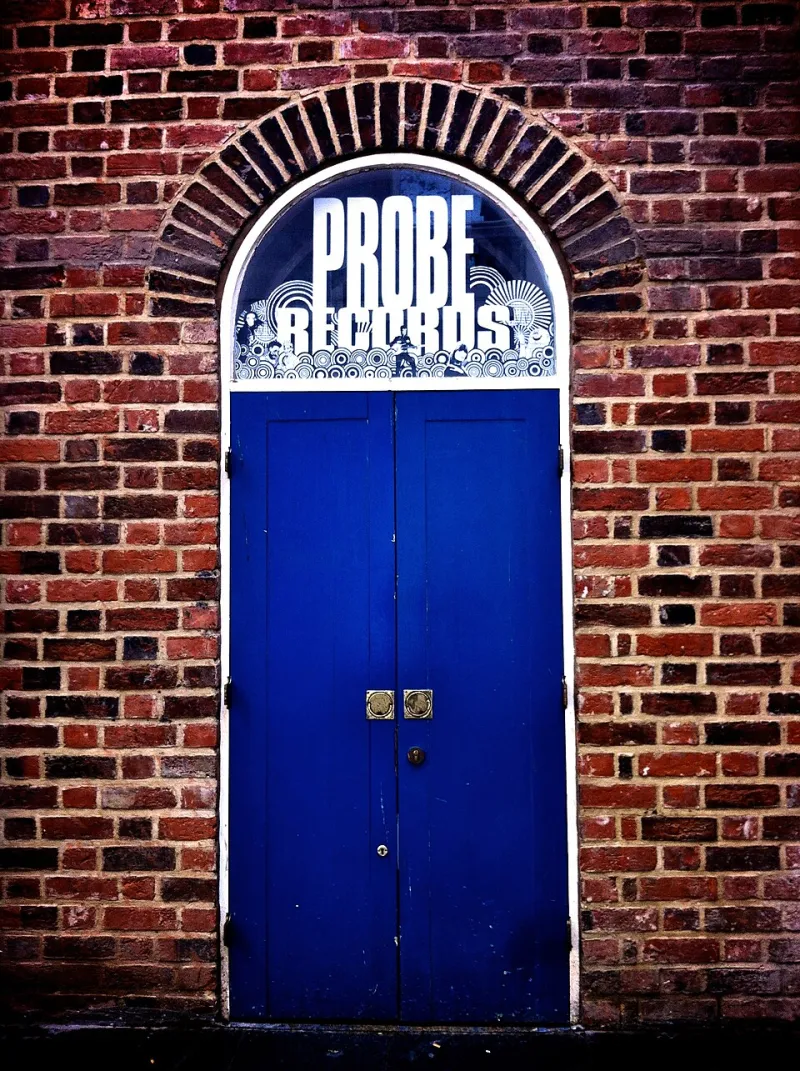
Photo: Giles Laurent, CC BY-SA 4.0, via Wikimedia Commons
There is a lamp post in the Northern Quarter that has been wearing gig flyers since before most of the bands on it were born. On a damp Tuesday in November 2026, it is carrying a psych night, a charity covers gig, a club night with a font that looks like it was designed on a broken photocopier and one lonely A5 flyer for a band whose name is just three letters and a question mark. The paper is wrinkled. The sellotape is doing its best. And somebody, somewhere, still thought it was worth printing.
The Lamp Post Is Still a Stage
The story of the Manchester gig flyer is not a story of extinction. It is a story of narrowing. Social media does the heavy lifting now. A band can announce a show on a Tuesday and have it sold out by Thursday without a single sheet of paper leaving a printer. The algorithm is faster. It is cheaper. It can reach someone in Leeds. But it cannot be pinned to a wall in the rain.
'Flyers are a physical reminder that a scene exists outside your phone,' says Cal, a designer who has made flyers for Manchester bands and club nights since art school. 'You can scroll past a post. You cannot scroll past a lamp post. You walk past it every day on the way to work and eventually you think, who are these people? Maybe I will go.'
That is the strange power of the crumpled flyer. It is not targeted. It is not data-driven. It is a small act of faith that someone will be nosy enough to stop and read it.
Who Is Still Printing?
In 2026, the people making Manchester gig flyers fall into a few rough groups. There are the band members themselves, usually armed with a Canva template and a Sunday afternoon. There are the promoters who still believe in a physical trail, especially for all-dayers, fundraisers and events that need to feel like a proper occasion. There are the art school students turning out risograph prints for their mate's noise punk night. And there are the record shop staff who still keep a stack by the counter because a flyer on the way out is a last chance to change someone's Saturday.
'We get bands dropping them in all the time,' says one Manchester record shop worker. 'Some of them are beautiful. Some of them are a QR code and a blurry photo of the band looking at a wall. The good ones get picked up. The bad ones sit there until they become part of the furniture.'
The best flyers do not just list a date and a venue. They carry a bit of the band's personality before anyone has heard a note. A bad drawing. A joke that only makes sense if you know the scene. A colour combination that should not work but does. A hand-scrawled correction because the venue changed two days before printing.
The Journey of a Flyer
A Manchester gig flyer has a short, strange life. It is designed in a bedroom. Printed in a shop in Ancoats or a university print room. Carried in a tote bag across town. Sellotaped to a window, a wall, a lamp post that is already 40 per cent sellotape. It sits in a record shop rack. Someone picks it up, glances at it, folds it in half and puts it in their coat pocket. It goes through the wash. It ends up on a bedroom wall or in the bin or, if it is lucky, in a shoebox under someone's bed for a decade.
'People do collect them,' says Cal. 'Not in a pretentious way. They just keep the ones that meant something. I have got flyers from gigs I went to when I was 17. I could not tell you what I had for tea last Tuesday, but I know exactly why I kept that one.'
That is the bit the feed cannot quite replicate. A post disappears into the scroll. A flyer gets creased, stained, torn at the corner and kept anyway. It becomes evidence. It says: I was there. This happened. Somebody cared enough to print it.
What Paper Says That a Feed Cannot
There is a temptation to turn this into a nostalgic complaint about the internet. But the Manchester flyer has not survived because people are sentimental. It has survived because it still works in the places algorithms are bad at reaching. The walk home from school. The pub noticeboard. The venue foyer where the support act's mate is trying to shift a stack before the headline band come on.
And in a city that loves its music history, there is something quietly important about the flyer as a record. The old ones tell us what a scene looked like before anyone decided it was important. They show the wrong venues, the misspelled band names, the nights that only 14 people attended and the ones that became legendary. They are not polished. That is the point.
So in 2026, the Manchester gig flyer is not dead. It is just doing what it has always done: surviving on the margins, carried by people who still believe a piece of paper can say more about a scene than an algorithm ever will.