Tape Doesn't Lie: Inside Manchester's Secret World of Bootleg Collectors
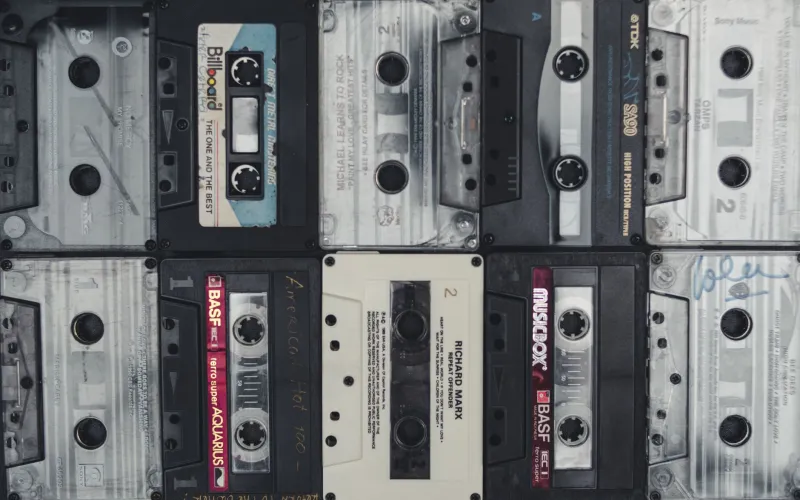
There's a bloke in Levenshulme — we'll call him Dave, because that's what everyone calls him — who has a spare bedroom that smells permanently of magnetic tape and old carpet. Floor-to-ceiling shelves. Hundreds of cassettes, CDRs, and hard drives. Handwritten labels in biro. Dates, venues, set times. Some of them barely legible. Every single one of them a gig that officially never existed.
Dave is not unusual in Manchester. He's just one node in a network that's been quietly running for decades, swapping, copying, cataloguing, and obsessing over live recordings that no label ever sanctioned and no streaming platform will ever host. This is the bootleg economy — and in this city, it's been thriving since before most of us had email addresses.
How It Started (And Never Really Stopped)
The mechanics have changed, obviously. In the early nineties, you were sneaking a Walkman with a decent condenser mic into the Haçienda or the Boardwalk, praying the battery held and the bloke next to you didn't decide that was the moment to shout "COME ON" directly into your recording. You'd go home, dub copies, and hand them round at school or at the next gig. It was physical, laborious, and brilliant.
Then came CDRs, then MP3s zipped and uploaded to forums, then private trackers, then encrypted Discord servers. The technology got sleeker. The obsession stayed exactly the same.
What drives it isn't piracy in the conventional sense. Most bootleg collectors will tell you, with some irritation, that they own every official release by the artists they record. The bootleg is something else entirely — it's the version of the gig that the band didn't get to edit, the night that existed only for the people in the room, now preserved in imperfect audio for anyone who cares enough to find it.
Why Certain Manchester Nights Became Currency
Ask any serious collector in this city and there are recordings that circulate like rare coins. A particular show at the International 2 in 1989 that supposedly captures a band mid-disintegration, the tension audible even through the hiss. A soundboard leak from a Madchester-era night at the Ritz that's been described as 'better than the album.' A Salford venue show from 2004 where a certain well-known act played an unannounced warm-up gig to about forty people and apparently lost their minds in the best possible way.
These recordings trade on reputation as much as quality. Someone who owns a clean audience recording of the right night holds genuine social currency in certain circles. You don't sell them — that's considered bad form. You trade them. You share them with people who have something equally rare to offer back. It's a gift economy with very specific rules.
"The worst thing you can do is put something on YouTube," one collector told us, grimacing like we'd suggested something genuinely offensive. "That's not sharing it, that's just destroying it. Half the value is in the scarcity."
The Ethics Nobody Agrees On
Here's where it gets complicated, and where the bootleg community tends to argue with itself. Is this okay?
The artists themselves have wildly different views. Some bands — particularly those who came up through Manchester's DIY scene — are quietly fine with it, viewing audience recordings as part of the living archive of a working band. Others have gone the other way entirely, citing loss of control over their own narrative, recordings taken out of context, rough nights preserved forever.
The collectors tend to draw their own moral line at profit. Trading a copy of a 1993 Boardwalk show for a copy of something equally obscure from the same era? Fine. Flogging CDRs at a car boot? That's where most people in the community will cut you off.
There's also the question of what happens when a band breaks up and these recordings become the only document of what they were. Several collectors we spoke to have independently decided that their archives constitute a kind of cultural preservation — that without them, certain chapters of Manchester's musical history simply cease to exist in any listenable form.
It's a defensible argument. It's also, conveniently, the argument that lets you keep doing what you love.
The Digital Generation Inherits the Tape
Younger collectors — and yes, there are younger collectors, don't let anyone tell you otherwise — tend to work differently. The physical romanticism of the cassette era doesn't mean much to someone who was born after minidiscs came and went. But the underlying drive is identical: find the version of the gig that wasn't meant to be found.
Private Discord servers have replaced the back rooms of record shops as the main exchange points. There are channels dedicated to specific venues, specific eras, specific bands. The etiquette is strict. Lurkers who don't contribute eventually get removed. Reputation still matters, just tracked differently.
What's interesting is how the digital shift has actually made certain older recordings more valuable, not less. A clean cassette transfer of something from 1987 is harder to come by than a lossless FLAC of something from 2015. Scarcity migrated rather than disappeared.
What the Tape Actually Tells You
The reason people keep doing this, beyond the collecting instinct, is that live recordings tell you things studio albums simply don't. You hear the gaps between songs. You hear what the band say to each other. You hear the room — the size of it, the mood of the crowd, whether people were into it or standing with their arms folded. You hear a singer's voice without the compressor making it perfect. You hear mistakes.
In Manchester especially, where so much of the mythology is built around specific nights and specific rooms, those recordings are the closest thing to a time machine that exists. The Haçienda is a block of flats now. The International 2 is long gone. The Boardwalk is a memory. But somewhere on a hard drive in Levenshulme, it's still 1991 and the tape is still running.
Dave wouldn't let us hear any of it, by the way. Not without something to trade.