The Night the Crowd Wrote History
There's something in the water in Manchester. Maybe it's the industrial heritage, maybe it's the football passion bleeding into everything else, but when Mancs gather for live music, they don't just watch – they participate with a ferocity that leaves artists speechless and creates legends that echo through decades.
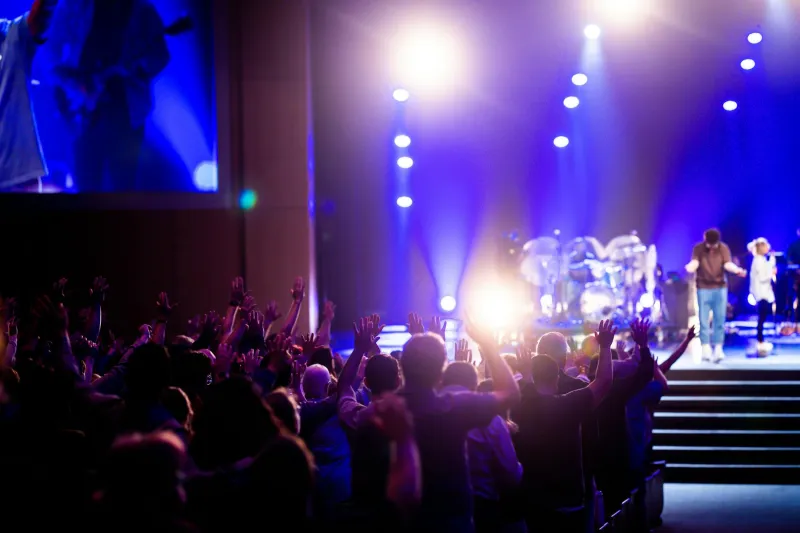
Ask any musician who's played Manchester about their most memorable gig, and nine times out of ten, it won't be about their performance – it'll be about what the crowd did. That's because in this city, the audience isn't just along for the ride; they're co-conspirators in creating moments that transcend the ordinary gig experience.
The Haçienda's Sweat-Soaked Democracy
The Haçienda wasn't just a club; it was a social experiment where the crowd became the ultimate DJ. Those legendary acid house nights weren't memorable because of the famous names on the decks – though they helped – but because of the collective euphoria that turned strangers into a unified organism, moving as one to beats that seemed to pulse directly from the city's heart.
Regulars from those days still talk about nights when the energy was so intense that the building itself seemed to vibrate with possibility. The crowd didn't just dance; they created a new language of movement that spoke to something primal and Manchester-specific. It was organised chaos, beautiful bedlam that only made sense when you were part of it.
Academy Anthems and Collective Catharsis
Fast-forward to the Academy, where indie bands discovered that Manchester audiences don't just sing along – they conduct entire orchestras of emotion. The Stone Roses' comeback shows weren't just concerts; they were communal therapy sessions where twenty years of musical nostalgia exploded into pure, cathartic joy.
Witnesses describe moments when Ian Brown would barely need to open his mouth before 2,000 voices picked up the slack, turning 'I Wanna Be Adored' into something that felt more like a religious experience than a pop song. The crowd wasn't covering the band; they were completing them.
Deaf Institute Intimacy and Beautiful Chaos
But it's not just the big venues where Manchester crowds work their magic. The Deaf Institute, with its cramped upstairs room and sweat-dripping ceiling, has hosted some of the most intense crowd-artist collaborations in the city's recent history. When Arctic Monkeys played their secret warm-up shows there, the 150-capacity room felt like it might explode from sheer excitement.
Those intimate gigs create a different kind of crowd energy – less stadium-sized euphoria, more living room intensity where every person in the room becomes part of the show's fabric. Musicians often talk about these smaller Manchester venues as places where they feel most exposed and most supported simultaneously.
The Oasis Effect: When Crowds Become Choirs
No discussion of Manchester crowd moments would be complete without acknowledging the Oasis phenomenon. Their Maine Road shows in 1996 weren't just concerts; they were civic celebrations where the entire city seemed to exhale collectively after decades of post-industrial uncertainty.
The crowd didn't just sing 'Don't Look Back in Anger' – they transformed it into something approaching a municipal anthem. Forty thousand voices creating harmony that had nothing to do with technical perfection and everything to do with shared experience and civic pride.
Night and Day's Underground Democracy
Meanwhile, in the basement at Night and Day Café, different kinds of crowd magic happen nightly. This isn't stadium-sized spectacle but something more subversive – audiences who know they're witnessing something special and respond with the kind of attention and energy that turns promising bands into legends.
The crowd here doesn't just watch; they participate in a kind of musical democracy where their energy can make or break a performance. It's quality control by collective enthusiasm, and it's created some of the most electric small-venue moments in the city's recent history.
The Unspoken Contract
What makes Manchester crowds special isn't just their enthusiasm – it's their understanding of an unspoken contract with performers. They'll give everything if you give everything back. It's not enough to phone it in; Manchester audiences can smell insincerity from the back row and will respond accordingly.
But when artists commit fully, when they acknowledge that they're part of something bigger than just their setlist, Manchester crowds become co-conspirators in creating moments that no studio recording could ever capture.
Beyond the Music
This crowd energy extends beyond the notes and beats. It's about community, about shared identity, about the particular way Manchester expresses its collective soul through live music. Whether it's 50 people crammed into Band on the Wall or 50,000 at the Etihad, there's a recognisable Manchester crowd energy that transforms good gigs into legendary nights.
These aren't just audiences; they're active participants in the city's ongoing musical conversation. They understand that live music is a collaborative art form, and they show up ready to do their part in creating something unrepeatable and magnificent.
That's the real magic of Manchester's music scene – not just the bands, not just the venues, but the people who fill them and turn every gig into a potential piece of local folklore. Long may they never shut up.