Mince Pies and Monitors: What Manchester Bands Actually Face at the Christmas Party Gig
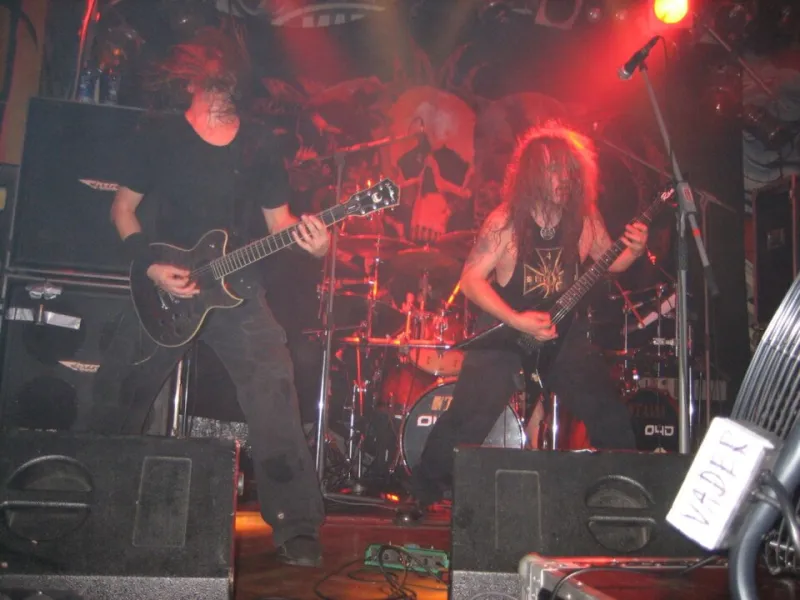
Photo: "Entombed" ([email protected]), Public domain, via Wikimedia Commons
It is late November 2026, and somewhere in Manchester a band is having the setlist argument. Not the usual one about whether the slow song kills the momentum. The Christmas party one. Do we play the new single or the one everyone knows? Do we do a cover? If we do a cover, is it acceptable to do Slade, or does that cross a line? And why does the venue's events manager keep saying the words 'party atmosphere' like it is a technical term?
The festive season is here. The office parties are booked. The showcases are filling up. The band who spent October playing a 150-cap room with a sticky floor and no dressing room are now loading their gear into a hotel function room with a carpet that smells faintly of mulled wine. It is not the gig they dreamed of. But it is a gig.
The Setlist Negotiation
The first compromise is always the set. A normal Manchester gig set is built for people who have chosen to be there. A Christmas party set is built for people who have been told there will be a buffet. The band know this. They also know that playing the same four songs they have spent all year carefully arranging might not land with a room full of people in paper hats.
'We call it the Christmas edit,' says Ruth, who sings in a Manchester indie band that has done its fair share of festive parties. 'You drop the eight-minute one. You drop the one that starts with a long intro. You might drop the one with the extended feedback section, even though it is your favourite. You keep the singles. You keep the one that gets people dancing. And then you have a conversation about whether you are selling out or being pragmatic.'
The answer, usually, is pragmatic. Nobody is booked to play a Christmas party because the organiser wants a challenging artistic statement. They are booked because the band can hold a room. That is not a small skill. It is just a different one.
Paper Hats and Pin-Drop Silence
The Christmas party crowd is not a normal gig crowd. They are not there for the support act. They are not there for the soundcheck. They are there because it is December, the work has stopped for the day and there is a free drink with their name on it. The first three songs will be background music. The next three might be a proper audience. The final three might be a singalong, or they might be someone asking the DJ to put on Mariah Carey.
'You have to read the room fast,' says Adam, a drummer who has played office parties, football club socials and one memorable Christmas boat party on the Manchester Ship Canal. 'You can see it in the first 30 seconds. If they are facing the stage, you are fine. If they are facing the buffet, you have to change. You cannot die on the hill of your own setlist. You have to meet them where they are.'
That might mean dropping a song, adding a cover, or telling the crowd a joke that is slightly worse than the ones they would normally use. The best bands treat it like a conversation. The worst bands stare at their shoes and hope the room will come to them. The room rarely does.
The Cover That Saves the Night
The cover is a delicate instrument. Done badly, it is a pub band cliché. Done well, it is a handshake with the room. Manchester bands have a rich history of making covers their own, and the Christmas party is where that instinct gets tested. Do you play the song everyone expects, or the song nobody expects but everyone secretly loves?
Ruth's band have a rule: one cover, and it has to be a song they genuinely enjoy playing. 'We did a version of a northern soul classic one year,' she says. 'It was not a Christmas song. It was not even a party song. But it was ours. The room went with it because we went with it. That is the trick. You cannot fake it.'
The same goes for the Christmas songs. There is a reason every band gets asked to play something festive, and there is a reason most of them resist. But if you can find one that does not make you wince, it can be the moment the night turns from a corporate obligation into something weirdly human.
Between the Mince Pies and the Monitors
The weirdest part of the Christmas party gig is the gap between the performance and the people. There is a buffet. There is a raffle. There is a colleague who has had three glasses of wine and wants to tell the bass player about the band they were in at university. The band are trying to pack down a drum kit while someone asks if they know any Oasis.
And yet, in the middle of all that, there are moments that are strangely genuine. A room full of people who would never normally go to a gig suddenly singing along to a chorus they have heard twice. A Christmas party organiser who booked a local band instead of a tribute act and looks quietly proud. A band realising that playing to people who do not go to gigs is not a compromise; it is a different kind of job.
'It is not cool,' says Adam. 'Nobody is going to write a blog about the Christmas party gig. But you learn things. You learn how to win over a room that is not on your side. You learn how to be entertaining without being fake. You learn that a gig is a gig.'
The Gig That Counts Anyway
So as December 2026 rolls in, spare a thought for the Manchester bands loading their gear into function rooms and hotel ballrooms and social clubs with tinsel on the amp. They are not playing the gig they dreamed of. But they are playing. And in a city that takes its music seriously, there is something worth respecting about a band who will turn up, read the room, play the cover and still try to make the last chorus mean something.
Mince pies and monitors. Paper hats and feedback. It is not rock and roll. It is something else. And sometimes, that is exactly what December needs.