Dancing Through Time: How Manchester's Club Scene Wrote the Soundtrack to Our Saturday Nights
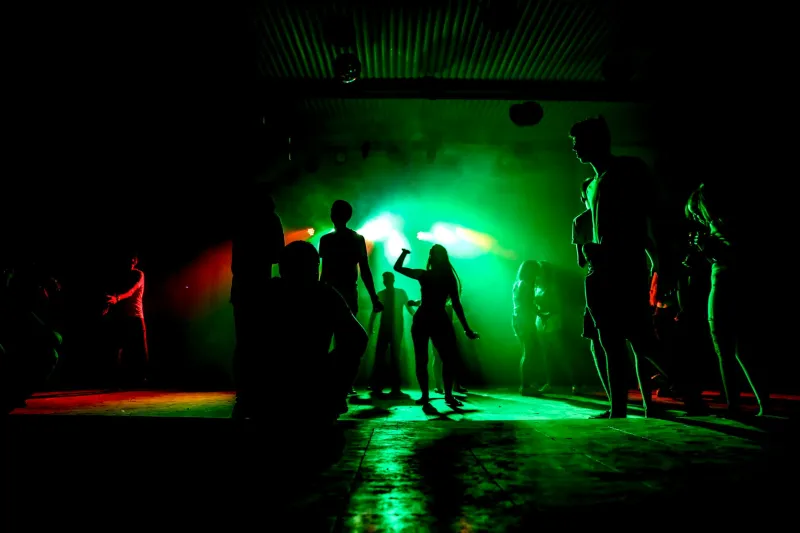
While everyone bangs on about Manchester's legendary gig venues, there's another story that unfolds when the last guitar chord fades and the real night begins. This is the tale of Manchester's club culture – a sweaty, euphoric journey through decades of beats, bass, and brilliant madness that's shaped our city's soul just as much as any indie anthem.
The Holy Grail: When the Haçienda Changed Everything
You can't talk Manchester clubs without starting at the Haçienda. Yeah, everyone knows the story, but here's the thing – it wasn't just about the famous faces or the Factory Records connection. It was about ordinary Mancs discovering something extraordinary on those sticky floors.
Mike Pickering wasn't just spinning records; he was rewiring the city's DNA every Friday night. When acid house exploded in '88, the Haçienda became ground zero for a cultural earthquake that rippled far beyond Whitworth Street West. Local lads like Graham Massey from 808 State were crafting the future in real-time, while punters from Wythenshawe to Wigan descended on what felt like the centre of the universe.
The genius wasn't just the music – it was how the Haçienda democratised nightlife. You didn't need to be cool, connected, or cash-rich. You just needed to surrender to the beat and let the strobes do the rest.
The Underground Years: When Clubs Went Rogue
When the Haçienda's lights dimmed for the final time in 1997, Manchester's club scene didn't die – it evolved. The late '90s and early 2000s saw a beautiful chaos emerge across the city. Promoters like the Bugged Out crew were transforming grotty venues into temples of electronic worship.
Places like Sankeys Soap became legendary not for their glamour, but for their complete lack of it. The toilets were grim, the sound system was patched together with gaffer tape and prayer, but when Sasha or John Digweed stepped behind the decks, none of that mattered. The crowd was everything – proper music heads who'd travel from across the North West for a proper session.
Remember the Music Box on Little Peter Street? That poky basement became a cathedral for drum and bass heads. LTJ Bukem would roll up at 2am and play until sunrise, with a crowd of 200 sweaty souls losing their minds to liquid funk. These weren't corporate nights – they were community gatherings disguised as club nights.
The Warehouse Revolution: Size Matters
Fast-forward to the 2000s, and Manchester's club scene was ready to think bigger. The Warehouse Project didn't just arrive – it conquered. Taking over massive industrial spaces, WHP proved that Manchester's appetite for proper clubbing was insatiable.
What made WHP special wasn't just booking the world's biggest DJs (though watching Carl Cox destroy Store Street was pretty special). It was how they captured that original Haçienda spirit of controlled chaos and scaled it up. Suddenly, 10,000 people could share that collective euphoria that previously belonged to intimate club crowds.
The genius of WHP was understanding Manchester's clubbing DNA. This isn't London – we don't do pretentious. We do proper. The queues might be longer and the tickets pricier, but when you're in that crowd, surrounded by proper Mancs all losing it to the same beat, you're part of something bigger than yourself.
The Characters Behind the Chaos
Every great club scene needs its characters, and Manchester's had them in spades. Take Kath McDermott from the Haçienda – she wasn't just working the door, she was curating the crowd. Her eye for spotting trouble and her legendary one-liners became part of the venue's mythology.
Then there's the DJs who never became household names but kept dancefloors moving for decades. Blokes like Jon Dasilva, who understood that the best club DJs aren't performers – they're conductors, reading the room and taking people on journeys they didn't know they needed.
The promoters deserve their flowers too. People like Sacha Lord, who've spent decades understanding that great club nights aren't just about the music – they're about creating spaces where strangers become mates, where Monday's worries dissolve into Saturday night's possibilities.
Today's Beat: The Scene That Never Stopped
Manchester's club scene today is beautifully schizophrenic. You've got massive commercial operations like Parklife dominating summer weekends, while underground collectives are still throwing illegal raves in abandoned warehouses across Ancoats.
Venues like Hidden have proved there's still appetite for proper intimate clubbing, while the annual pilgrimage to WHP shows that Manchester's love affair with big room euphoria burns as bright as ever. The Warehouse Project's evolution into a year-round operation isn't just business expansion – it's recognition that Manchester needs its weekly dose of controlled madness.
The Beat Goes On
What makes Manchester's club culture special isn't the famous venues or the celebrity DJs – it's the understanding that clubbing is community. From the Haçienda's original family to today's warehouse warriors, it's always been about ordinary people creating extraordinary moments together.
The venues change, the music evolves, but that fundamental truth remains: when the gigs end and the clubs open, Manchester comes alive in a different way. It's messier, sweatier, and more unpredictable than any concert hall experience. And that's exactly how we like it.
So next time you're queuing outside some basement club at midnight, remember – you're not just waiting for a night out. You're joining a tradition that's been shaping this city's soul for over four decades. The beat goes on, and so do we.