Learning the Language
Every great Manchester musician has a secret: they spent their early years playing other people's songs. While the mythology of our music scene celebrates the raw, untamed genius of bands who seemingly emerged fully formed, the reality is far more beautiful. Our greatest artists learned their craft in the unglamorous back rooms of working men's clubs, perfecting Stone Roses riffs and Joy Division basslines until they could play them in their sleep.
The cover band circuit isn't where dreams go to die – it's where they learn to walk before they can run. It's Manchester's unofficial music school, a place where timing, stage presence, and the subtle art of reading a room are mastered one faithful reproduction at a time.
The Apprenticeship Years
"I spent three years in a Smiths tribute band before I wrote my first original song," admits Jamie Morrison, whose indie outfit The Velvet Decline has been making waves on the Manchester scene. "People think it's selling out, but it's actually the opposite. You learn what makes a song work by playing it night after night. You understand why Marr's guitar parts are genius because you've tried to nail them a hundred times."
This sentiment echoes throughout Manchester's music community. The cover circuit operates as an extended masterclass in musicianship, where the pressure to recreate beloved songs note-for-note forces players to develop technical skills they might never have acquired otherwise.
Sarah Chen, whose band Neon Ghosts recently signed to a Manchester indie label, cut her teeth in a New Order tribute act. "Playing 'Blue Monday' properly teaches you about rhythm in ways that jamming never could," she explains. "When you're responsible for that iconic bassline, you can't be sloppy. The audience knows every note."
The Working Men's Club University
Manchester's working men's clubs and social clubs have served as the unofficial campuses for this musical education. Places like Middleton's Conservative Club and the Royal British Legion halls across Greater Manchester have hosted thousands of cover band performances, each one a lesson in crowd dynamics and musical communication.
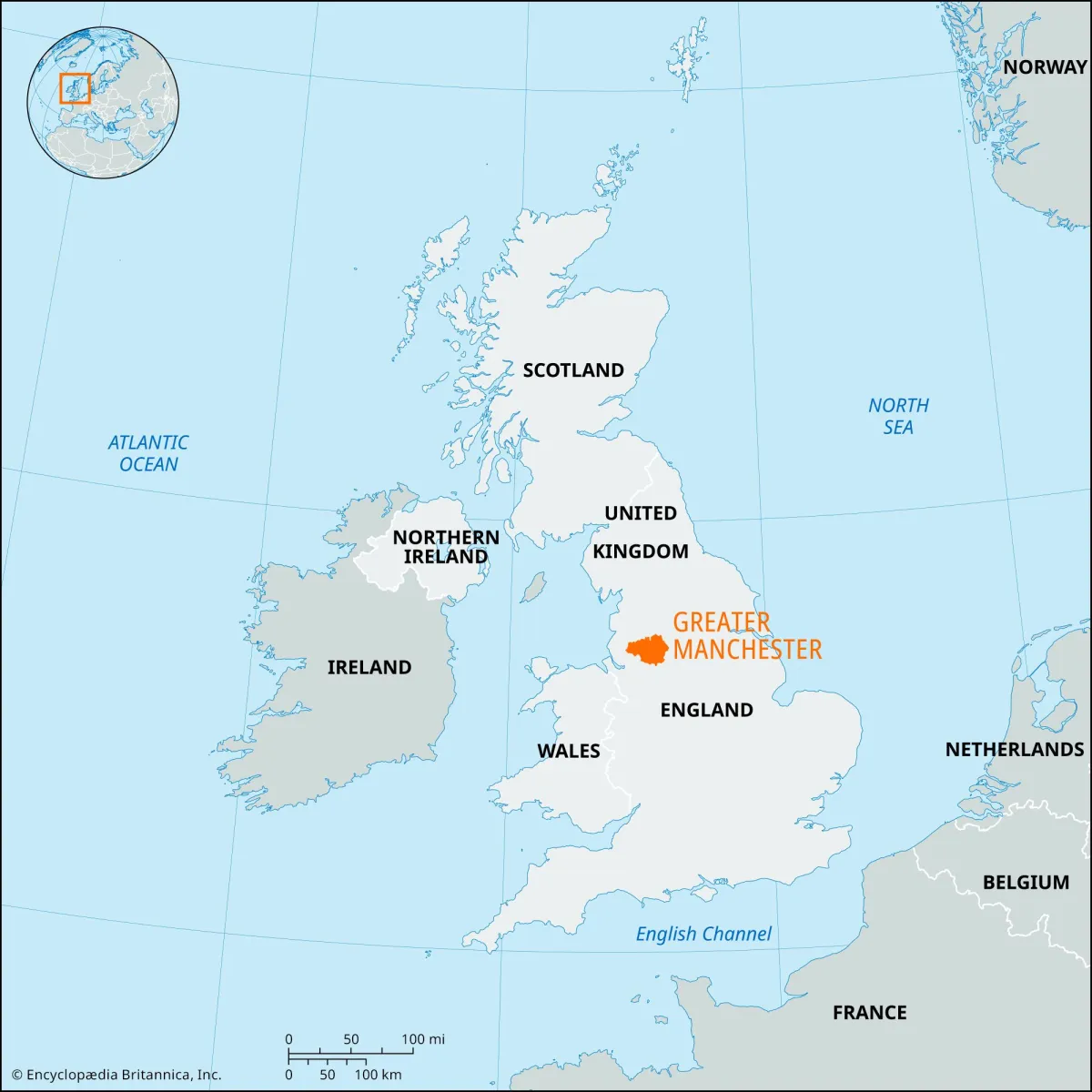 Photo: Greater Manchester, via cdn.britannica.com
"The clubs taught me everything about performing," says Dave Roberts, whose original band The Frequency Thieves emerged from years of weekend Oasis tributes. "You're playing to people who lived through the original music. They know if you're faking it. You learn to respect the songs, and in doing that, you learn to respect music itself."
These venues operate on a different timeline than the city centre's trendy music bars. Here, bands play longer sets, interact more with audiences, and develop the stamina that separates weekend warriors from professional musicians. The education is comprehensive: learn to entertain a room of steelworkers on a Friday night, and you can handle any festival crowd.
The Imitation Game
The art of musical imitation runs deeper than simple mimicry. When Manchester musicians spend months perfecting someone else's style, they're essentially reverse-engineering the creative process. They discover why certain chord progressions work, how rhythm sections lock together, and what makes a vocal melody memorable.
"Playing in a Pink Floyd tribute band for two years taught me more about songwriting than any course could," reflects Tom Bradley, whose psychedelic outfit Cosmic Debris has been gaining attention across the North West. "You realise that even the most complex songs follow certain rules. Once you understand those rules, you can break them intelligently."
This deep dive into existing music creates a foundation that supports original creativity. Manchester's musicians don't just copy their influences – they digest them, understand them, and eventually transcend them.
The Network Effect
The cover band scene creates connections that often outlast the tribute acts themselves. Musicians meet other players, share techniques, and form relationships that eventually blossom into original projects. The drummer from a Radiohead tribute might end up in an original folk band with the bassist from a Led Zeppelin cover act.
"Half of Manchester's current scene can trace their connections back to the cover circuit," observes local music photographer Lisa Chang, who's been documenting the city's musical evolution for over a decade. "These bands are like musical speed dating – players find out who they work with, who shares their ambitions, who's reliable. It's networking disguised as entertainment."
The Confidence Builder
Perhaps most importantly, the cover band circuit builds confidence. There's something powerful about standing on stage and delivering a perfect version of 'Don't Look Back in Anger' to a room full of people singing along. It teaches musicians that they can command an audience, that they can be the focus of a room's attention.
"My first original gig was terrifying," admits Lucy Park, whose indie-folk project The Weathered has been picking up radio play. "But I'd already performed in front of hundreds of people as part of a Cranberries tribute. I knew I could hold a stage. That confidence carried me through the scary part of playing original material."
Evolution, Not Imitation
The most successful transitions from cover to original music happen when artists use their tribute experience as a springboard rather than a template. They take the technical skills, the stage presence, and the musical understanding they've developed, but apply them to their own creative vision.
"The goal was never to be the best Oasis tribute forever," explains Marcus Wright, whose original band The Northern Lights has been building a following across the UK. "It was to learn everything those songs could teach us, then use that knowledge to write our own. The covers were our training wheels."
The Continuing Cycle
Today's Manchester music scene continues this tradition. New tribute bands form regularly, often featuring musicians who will go on to create the next generation of original Manchester music. The cycle continues, ensuring that the technical standards and musical knowledge of previous generations are passed down while leaving room for innovation and creativity.
The cover band circuit remains one of Manchester's best-kept secrets – a training ground that produces polished, confident musicians who understand their craft from the ground up. It's where tomorrow's headliners are learning today's classics, preparing to write the songs that the next generation of cover bands will spend their apprenticeships perfecting.
In a city that's given the world so much original music, it's beautiful to know that the tradition continues through musicians humble enough to master the past before creating the future.