Beyond the Derby: When Manchester Music Made Red and Blue Sing as One
The Impossible Dream
Anyone who's lived in Manchester knows the score. You're either red or blue, and that decision shapes everything from where you drink to who you marry. The rivalry between Manchester United and Manchester City isn't just about football – it's tribal identity that permeates every aspect of life in this city. Which makes what happened at the Apollo on a rainy Tuesday in 1995 all the more remarkable.
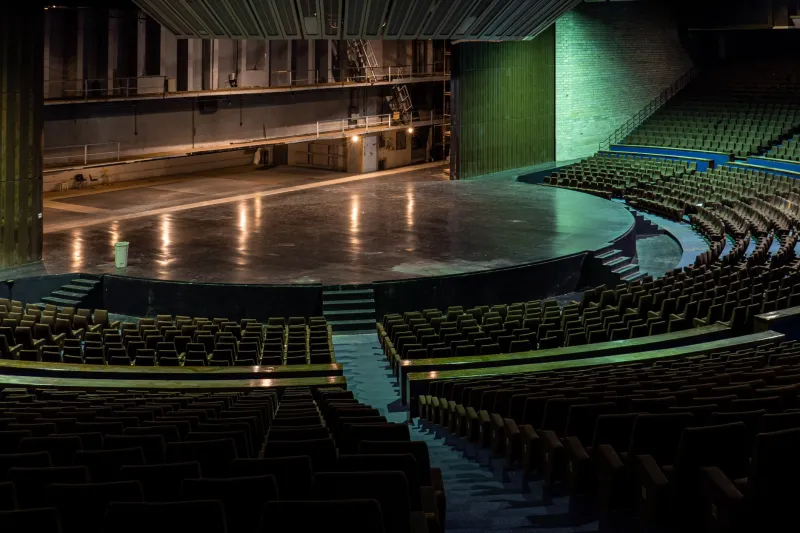
 Photo: The Apollo, via assets.sbnation.com
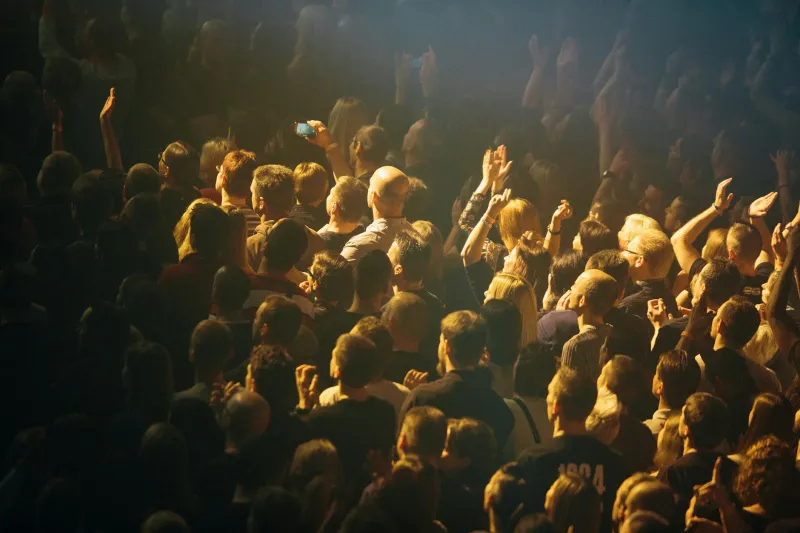
The Stone Roses were making their comeback, and for one night, the Stretford End and the Kippax were singing the same songs. United scarves hung next to City shirts on the barrier, and nobody seemed to care. For 90 minutes, Manchester was united by something more powerful than football: the music that defined a generation.
"I've never seen anything like it," recalls venue security veteran Big Tony, who's worked every major Manchester gig since the '80s. "You had proper hardcore fans from both sides, and they were hugging each other during 'I Am The Resurrection'. In any other context, they'd have been throwing punches."
The Neutral Ground
Certain Manchester venues have earned unofficial status as neutral territory, spaces where football allegiance takes a backseat to musical passion. The Band on the Wall, tucked away in the Northern Quarter, has always operated above the fray. Its intimate setting and eclectic programming attracts music lovers first, football fans second.
"We've never had trouble with football rivalry here," explains longtime booker Janet Simpson. "Maybe it's because we book everything from jazz to experimental electronic. Hard to start a fight over Squarepusher, isn't it?"
The Academy venues occupy more complex territory. Large enough to host major acts that transcend tribal boundaries, but intimate enough that the usual segregation becomes impossible. When everyone's crushed together in front of the stage, red and blue shirts become irrelevant.
The Ritz holds special significance as the venue where Oasis played some of their most legendary early gigs. Despite the Gallagher brothers' well-documented City allegiance, their shows always drew fans from across the divide. Music, it seemed, could override even the deepest sporting loyalties.
The Unifying Anthems
Some songs simply refuse to recognise football boundaries. 'Blue Monday' by New Order gets every Mancunian moving, regardless of which shade of blue they prefer. The Smiths catalogue belongs to the entire city, Morrissey's wit and Marr's melodies providing a soundtrack that spans generations and allegiances.
"You can't claim The Smiths for one side or the other," argues lifelong United fan and music journalist Pete Collins. "They're Manchester, pure and simple. Same with Joy Division, Happy Mondays, all of them. The music comes from the city, not the stadium."
Oasis present a fascinating case study. Despite Noel and Liam's vocal City support, their biggest anthems have been adopted by United fans too. 'Live Forever' and 'Don't Look Back in Anger' soundtrack Manchester moments that have nothing to do with football – celebrations, commemorations, and communal experiences that unite rather than divide.
The Manchester Arena bombing in 2017 crystallised this phenomenon. When the city came together to mourn and heal, the soundtrack wasn't football chants but Manchester music. Oasis songs echoed through vigils attended by fans from both sides of the divide, proving that in moments of real significance, tribal boundaries dissolve.
 Photo: Manchester Arena, via webneel.com
The Diplomatic Artists
Certain Manchester musicians have successfully navigated the red-blue divide through careful diplomacy or strategic neutrality. James, despite their Stretford origins, have always maintained broad appeal across the city. Tim Booth's universal themes and the band's inclusive live shows created space for everyone.
"We never wanted to be seen as belonging to one tribe," Booth explained in a 2019 interview. "Music should bring people together, not drive them apart. Manchester's too small for artificial divisions."
The Chemical Brothers, while not strictly Manchester natives, earned honorary status through their frequent appearances and collaborations with local artists. Their electronic anthems provided neutral ground where football allegiance became irrelevant – everyone was united in the pursuit of the perfect drop.
Even newer acts like Everything Everything have benefited from this musical neutrality. Their art-rock approach and complex lyrics appeal to music obsessives regardless of sporting preference, proving that intellectual curiosity can override tribal instincts.
The Haçienda Effect
No discussion of Manchester's musical unity is complete without acknowledging the Haçienda's unique role. Factory Records' legendary nightclub operated as genuinely neutral territory during its heyday. Football might have mattered on Saturday afternoons, but Friday nights were about acid house and Ecstasy.
 Photo: The Haçienda, via wwwimage-us.pplusstatic.com
"The Haçienda was bigger than football," remembers regular clubber and City season ticket holder Marie Henderson. "You didn't ask what team someone supported – you asked if they'd heard the latest 808 State track. The music was the only thing that mattered."
The club's influence extended beyond its own walls. The Madchester scene it spawned created a cultural identity that competed with football for the hearts and minds of young Mancunians. For perhaps the first time in the city's history, being into music became as important as being into football.
This legacy continues today. Warehouse Project events regularly draw crowds where red and blue merge into a sea of faces united by bass drops and shared euphoria. The descendants of Haçienda clubbers still believe that the right DJ can make tribal boundaries disappear.
The Modern Challenge
Today's Manchester music scene faces new challenges in maintaining this tradition of unity. Social media has amplified tribal identities, making it harder for artists to remain neutral. Every opinion is scrutinised, every social media like analysed for hidden meaning.
Yet the tradition persists. When Blossoms headline the Albert Hall, the crowd represents a cross-section of Manchester that would be impossible to achieve at any sporting event. When Courteeners play Heaton Park, red and blue scarves wave side by side, united in devotion to songs that speak to shared experiences rather than divided loyalties.
"Football divides us 19 times a season," observes music photographer Sarah Chen, who's documented Manchester gigs for over a decade. "Music unites us 365 days a year. That's a pretty powerful equation."
The Lasting Legacy
Perhaps the most remarkable thing about Manchester's musical unity isn't that it exists, but that it's survived. In a city where football rivalry has only intensified with success on both sides, music continues to provide common ground.
The venues that host these moments of unity have become sacred spaces in their own right. The Academy, the Apollo, Band on the Wall – these aren't just concert halls but temples to the idea that shared passion can overcome inherited prejudice.
As Manchester's music scene continues to evolve, this tradition of transcending tribal boundaries remains its greatest strength. In a world increasingly divided by artificial differences, Manchester's musicians continue to prove that the right song, in the right venue, at the right moment, can make anyone sing along.
After all, when 'I Am The Resurrection' kicks in, nobody cares what colour shirt you're wearing. They just care that you're there, part of something bigger than football, bigger than rivalry, bigger than the petty divisions that usually define us. For those four minutes, Manchester truly is united.